
New Puppy
Puppy training step by step: one clear path for your puppy and rescue dog
You do not need another video. You need one order to do things in, from the first day home through potty, crate calm, biting and basic cues.
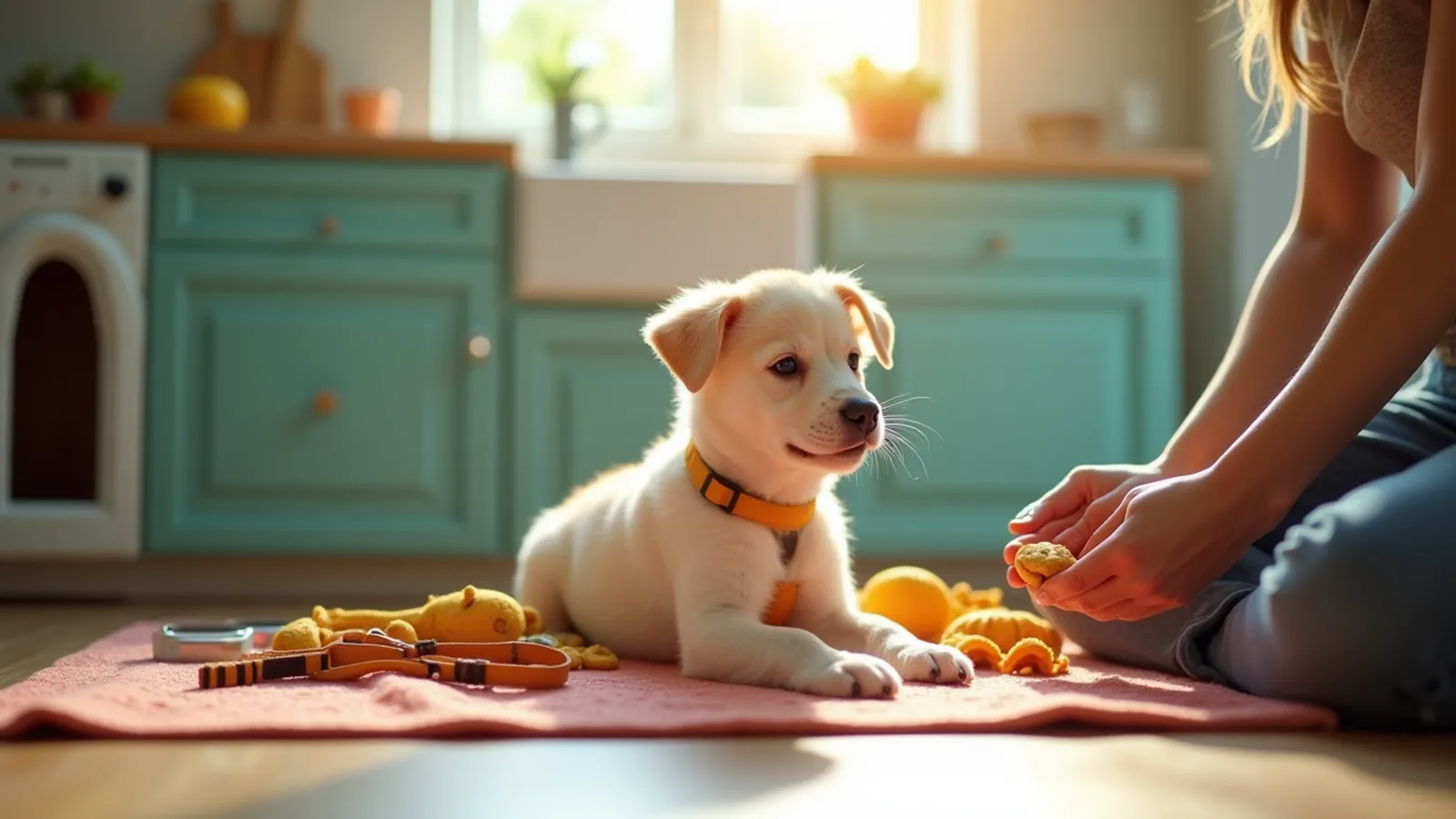
On this page (9 sections)
- Dog and puppy training: why the order matters more than the video
- The five-stage puppy training plan
- Conflicting instructions, and what this site does instead
- Two dogs, two stages: puppy plus rescue dog
- Videos, a puppy class and the course you were asked to buy
- When to get professional help
- Frequently asked questions
- Keep going
- Sources
Your evening goes like this: one video says let the puppy cry it out, the next says never close the crate door, and a third says a puppy class will sort it out. By bedtime you have watched more advice than you have trained, and the only thing you are sure of is that you do not want to get this wrong for the puppy or for the rescue dog who was here first.
That is not a discipline problem. It is a sequencing problem. Puppy training gets simpler when you follow one order instead of collecting tips: management and routine first, then potty, then crate calm, then bite inhibition, then basic cues. Each stage makes the next one easier, and each stage below has a reason you can check.
Key takeaways
- One sequence beats twenty tips: management and routine, potty, crate calm, bite inhibition, then basic cues.
- Set the day up so your puppy cannot rehearse what you do not want. Gates, naps, chews and separate spaces are part of training, not a shortcut.
- Never force a frightened dog into a crate. Best Friends says not all puppy mill dogs can be, or should be, crate-trained.
- For biting, offer a chew or toy, pause play calmly, and leave the room briefly if your puppy keeps going. Do not snatch your hand away or shout.
- Short closed-door crate sessions, ended before anxiety signs start, replace both "cry it out" and "never close the door".
- A class, a video or a paid program is a piece, not the plan, and none can promise a result for two dogs at different stages.
Do this today
- Pick one toilet spot outside, one safe space for the puppy, and one quiet place your rescue dog can reach without being followed.
- Write the five stages on a note where you will see them, and stop collecting new plans for now.
- Plan two short puppy sessions and one calm session with your rescue dog, separately.
Dog and puppy training: why the order matters more than the video
Management means setting up the day so your puppy cannot practice what you do not want. Gates, closed doors, chews, naps and separate resting spaces are not cheating. They buy you time to reward the behavior you do want, and they protect your rescue dog from a puppy who has not learned any manners yet.
Routine comes first for the same reason. A tired puppy who can rehearse biting, chasing or toileting indoors is harder to teach than one whose day is already set up to succeed. Training for a puppy is not about starting with sit. It is about building a predictable day, then adding skills in an order that prevents problems instead of repairing them.
If you have searched "dog and puppy training", "puppy training dog" or "dog training for puppy", you have probably noticed the results overlap almost completely. The individual tips are often similar. What differs is whether anyone tells you which one comes first.
| Stage | What you are building | Why it comes here |
|---|---|---|
| 1. Management and routine | Sleep, safe spaces, gates, chews, separate dog time | Stops unwanted behavior being practiced while you teach |
| 2. Potty | One toilet spot, frequent calm trips, quiet rewards outside | Accidents are far easier to prevent than to undo |
| 3. Crate calm | An open safe space first, then short closed periods | A calm crate gives you naps, safety and travel options |
| 4. Bite inhibition | Redirecting mouthing, pausing play, calm limits | Tired, bored or overexcited puppies mouth more |
| 5. Basic cues | Name, sit, come, settle and loose leash | These sit on top of a routine, not instead of one |
The five-stage puppy training plan
Work through the stages in order, but do not wait for perfection before starting the next one. Use the move-on tests as a guide rather than a calendar: every dog is different, and your puppy's age, sleep and past experience set the pace.
Set up management and routine first
Decide where the puppy sleeps, where your rescue dog can retreat, and how you will separate them when you cannot watch both. Put chews and food toys in the puppy's safe space so resting has something to offer. Dogs Trust notes that overtired puppies mouth more, which makes sleep part of training rather than a break from it.
Do not force closeness or handling with your rescue dog. Best Friends advises going slowly and being guided by what the dog shows they are ready for, rather than forcing them to accept anything that seems distressing, including a collar, a harness or going outside.
Move on when: the puppy has a predictable rhythm of nap, toilet trip, food and short play, and both dogs can be separated calmly by a gate or a door.
Teach potty before you teach tricks
Take your puppy out often, and quietly reward them when they go in the spot you chose, rather than waiting for accidents and reacting to them. Best Friends ties toilet trips to the rest of the plan: give your dog the chance to go to the bathroom first, any time they are going to be in a crate with the door closed. Build those trips into the points in the day where your puppy usually needs to go, and keep the order the same each time so the trip has a clear meaning.
Stay boring out there so the yard is not more exciting than the job, and clean up indoor accidents without punishment: an accident tells you to take the puppy out sooner, not that the puppy should feel bad. Everyone in the house should run the same routine, because Dogs Trust says everyone interacting with your puppy needs the same rules and consistency. If your rescue dog also has accidents, plan that separately. The puppy potty training schedule gives you a full day to copy.
Move on when: you can predict the puppy's usual toilet times and get them outside before most accidents happen.
Build crate calm without forcing it
Best Friends describes two jobs for a crate: a safe haven with the door open, and confinement with the door closed. Start with the open-door version. Feed the puppy in the crate, leave treats in there, and keep the door open whenever it is not necessary to close it. Before you close it, give the puppy the chance to go to the bathroom.
When you do close the door, keep the period short and watch for the first signs of anxiety: pacing, pawing at the door, digging into the corners, crying, whimpering or barking. Run several short sessions a day, stay below the point where those signs start, and lengthen the time gradually over the next few weeks, as Best Friends describes.
That is how this plan settles the loudest clash in the videos. You do not have to choose between a long cry-it-out stretch and never closing the door at all: short closed-door sessions, ended before panic, do both jobs. If your puppy is distressed, open the door and make the step smaller. For a rescue dog, Best Friends warns that some are terrified of crates and should not be forced to live in one, so a pen or a safe room can be kinder. The crate training plan breaks this into smaller steps.
Move on when: your puppy can rest with the door closed for a short period without pacing, crying or trying to get out.
Teach bite inhibition with redirection and pauses
Puppy mouthing is normal, and it still needs limits. Dogs Trust suggests keeping a chew or toy nearby and redirecting your puppy onto it when they bite hands, with a brief play so the toy becomes more fun than grabbing at you. If your puppy does bite, stay still and calmly pause play or interaction. Try not to pull away quickly or shout, because that can worry your puppy or turn the whole thing into a game. If they are very persistent, briefly leave the room.
Everyone in the house needs the same rules, or the puppy learns that the rules depend on who is holding the toy. Dogs Trust also notes that rescue dogs may bite out of fear, frustration or past experience, and may simply be overwhelmed and asking for space. That is not naughtiness. Avoid known triggers for now and give a newly adopted dog time to settle.
Move on when: your puppy redirects to the toy most of the time and can pause when the game stops. Expect slips when they are tired or overexcited. The puppy biting guide has the full redirection plan.
Add basic cues last, in short sessions
Now teach the cues you will actually use: name, sit, come, settle and loose leash. Train one at a time, reward the behavior you want, and stop before your dog loses interest. Train the puppy and the rescue dog separately so neither has to compete for food or attention.
If your rescue dog pulls or jumps up, use the same reward-based rules rather than a different philosophy for the older dog. The loose-leash guide fits this stage.
Keep going: practice in easy places first, then add distractions. A cue is not finished until your dog can do it in the kitchen, in the yard and on a quiet walk.
Conflicting instructions, and what this site does instead
Most of the confusion comes from advice that is partly true in one situation and unhelpful in another. Here is how this plan resolves the clashes you are most likely to meet.
| You will hear | What this site does instead | Why |
|---|---|---|
| Let the puppy cry it out. | Build closed-door time below the point where anxiety signs appear, and shrink the step the moment your puppy is distressed. | Best Friends lists pacing, pawing at the door, digging, crying, whimpering and barking as signs of anxiety to watch for, so you stay under that line rather than pushing through it. |
| Never close the crate door. | Keep the door open for the safe-haven job, and use short closed periods for confinement. | Best Friends describes both jobs for a crate, not one. |
| Hold the muzzle shut, yelp loudly or snatch your hand away. | Redirect to a toy or chew, pause play calmly, and leave the room briefly if it continues. | Dogs Trust says pulling away quickly or shouting can worry your puppy or make biting more exciting. |
| Buy a no-pull harness and the pulling stops. | Use gear for safety and control, and teach loose leash as its own skill with rewards. | In this plan a harness is safety equipment, not a lesson. The reward-based teaching is the part that changes behavior. |
| Be consistent — and leave it at that. | Same rules for every person and every dog in the house, written down, with one plan per dog. | Dogs Trust says everyone interacting with your puppy should follow the same rules and be consistent. That is a concrete instruction, not a mood. |
Punishment-based corrections, including shock collars, prong collars, choke chains, alpha rolls and scruffing, are not part of this plan and are not recommended anywhere on this site. The AVSAB position statement on humane dog training recommends reward-based methods and advises against aversive tools and techniques, so that is the only approach used here.
Gear without the guesswork
If you are shopping for equipment, read the fit guide before you buy: how to choose a no-pull harness. Best Friends notes that if there is any reason to think a dog might spook and panic, a collar and a harness, each with its own leash attached, can be safer than relying on one piece of equipment. Swapping equipment does not, on its own, teach a dog what to do instead of pulling; here it is safety gear, not the training plan.
Two dogs, two stages: puppy plus rescue dog
Your puppy and your rescue dog are not on the same lesson plan. The puppy needs sleep, toilet trips and short training games. The rescue dog may need space, predictability and a much slower pace. Neither dog should have to compete for food, beds or your attention while they learn.
Use gates and separate rooms so each dog can eat, rest and train without an audience. Train the puppy while the rescue dog is resting, then swap. Keep the same house rules for both: no hands near mouths during play, no crowding a dog who is eating, no forced greetings. And do not let the puppy chase, climb on or corner your rescue dog. That is not socialization; it is rehearsal for a fight.
A household with a young puppy and a nervous rescue dog puts a gate across the kitchen doorway. The puppy eats and naps on one side. The rescue dog eats and rests on the other, with a sightline but no access. Training happens in short separate sessions, and the two dogs share only calm, supervised time at first. The aim is not instant friendship. It is giving both dogs enough space to learn.
If your rescue dog has a bite history, guards food or toys, or freezes and snaps when approached, stop the introductions and get professional help. The Rescue Dog start-here page explains why the first weeks are about settling rather than teaching every trick.
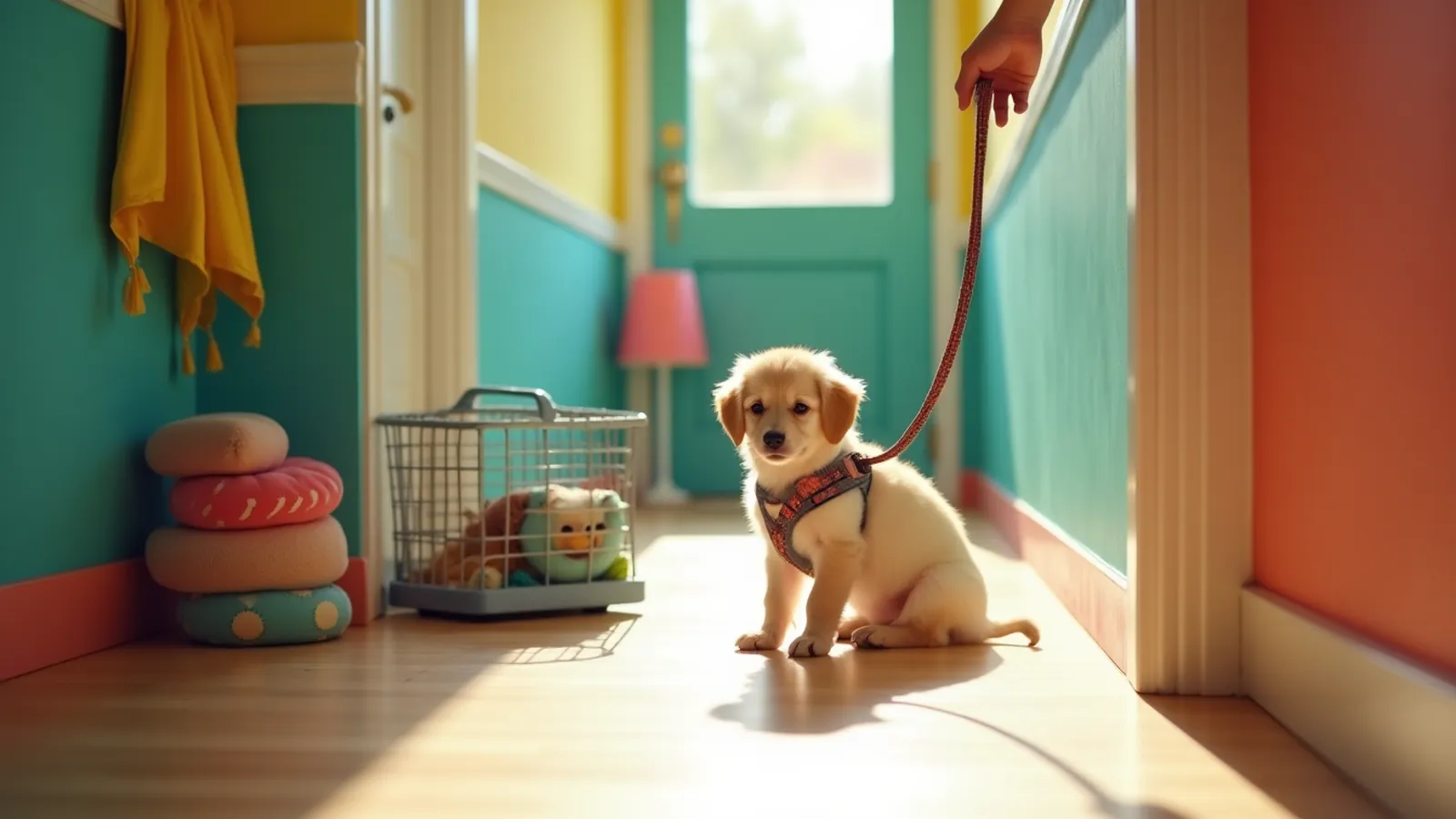
Videos, a puppy class and the course you were asked to buy
If you have already worked through videos and a puppy class, you are not back at zero. You have probably collected useful pieces without a sequence to put them in. A class is good practice for being around other people and dogs, but it cannot run your daily routine. The work happens in the small choices you make all day: where the puppy naps, when you take them out, what happens when teeth touch skin, and how your rescue dog gets time away from the puppy.
This guide is free, and it does not promise a result. No honest program can promise that a puppy and a rescue dog will both be sorted by a course, especially without seeing the dogs. If you are considering The Online Dog Trainer (opens in a new tab), read what the vendor states on its own pages and check the refund terms before you pay. We have no affiliate relationship with The Online Dog Trainer today, and we earn nothing if you buy. If that changes, this sentence and the links will say so. Our Doggy Dan review sets out what the vendor lists on its site, dated, with no hands-on claims.
Before you pay for any program, ask four questions. Does it use reward-based methods only? Does it cover multi-dog households and rescue dogs, not just puppies? Does it tell you when to see a veterinarian or a behavior professional? Is there a clear refund path if the format does not suit you? If the sales page leans on week-one promises or guaranteed results, close it. Those are not evidence that the program works.
Money is worth spending in a sensible order. A vet check comes first, especially for a rescue dog with a bite or a sudden change in behavior. A qualified behavior consultation matters more than a course if there are safety concerns. Then use free, staged plans like this one for the daily puppy work, and buy gear only when it solves a problem you can name.
When to get professional help
Stop and call for help if
- Any bite breaks skin, or a dog guards food, toys or space with growling, snapping or biting.
- A dog shows severe fear, freezes, panics, or cannot settle in ordinary situations.
- A dog injures themselves trying to escape, or panics whenever they are left alone.
- There is a sudden change in behavior, or a bite you do not understand. Start with your veterinarian.
Who to call. Start with your veterinarian: pain, illness and medication side effects can all show up as behavior changes. For behavior problems, look for a board-certified veterinary behaviorist (ACVB directory), a certified applied animal behaviorist, or a certified behavior consultant, for example through the IAABC or the CCPDT directories. Ask any trainer which methods they use; reward-based is what the American Veterinary Society of Animal Behavior recommends.
Dogs Trust advises a vet check to rule out pain or illness after a bite, then support from a qualified behaviorist. With a puppy, if mouthing is difficult to interrupt or is causing injury, ask for help early rather than waiting for it to become a bigger problem. Distress about being left alone is a different problem from crate training and needs its own assessment and plan, not a longer closed-door session.
Frequently asked questions
What should training for a puppy include first?
Start with management and routine: sleep, safe spaces, gates, chews and a predictable toilet schedule. Then add crate calm, bite inhibition and basic cues. This order stops your puppy practicing unwanted behavior while you teach the skills you actually want, and it keeps your rescue dog's routine steady at the same time.
Is dog and puppy training the same thing?
The learning rules are identical whether you search "puppy training dog" or "dog training for puppy": reward what you want, manage what you do not want, and change things in small steps. A puppy needs more sleep and more toilet trips. An adult rescue dog may need a slower pace and more space. Same sequence, different starting point.
Can dog training for a puppy start before the vaccinations are finished?
Ask your veterinarian. The AVSAB position statement on puppy socialization recommends socializing puppies early and safely, with your vet advising on vaccinations and on where it is safe to go. Training at home and in your own yard can start on day one.
How long does puppy training take?
There is no fixed timeline. Progress depends on age, sleep, past experience and the environment, and every dog is different. Use the move-on tests in this guide rather than a calendar. If a stage stalls for weeks, or you see fear or aggression, get professional help rather than pushing harder.
Can I train a puppy and a rescue dog at the same time?
Yes, but train them separately for now. Use gates, separate meals and short one-to-one sessions. Give the rescue dog space to settle, and do not let the puppy rehearse chasing or mouthing at them. Same rules, separate plans, and calm supervised time only when both dogs are relaxed.
Sources
- What to Expect When Rescuing a Puppy Mill Dog, Best Friends Animal Society (accessed October 29, 2026).
- Mouthing, Nipping and Biting, Dogs Trust (accessed October 29, 2026).
- Position Statement on Humane Dog Training, American Veterinary Society of Animal Behavior (accessed October 29, 2026).
- Position Statement on Puppy Socialization, American Veterinary Society of Animal Behavior (accessed October 29, 2026).
New puppy? Start here
The first weeks with a puppy in the order that matters: sleep, toilet trips, the crate, biting and socialization.