
New Puppy
How to stop puppy biting without making it worse
Puppy biting is normal play, not a sign you are failing. Here is a calm routine that teaches a soft mouth first, then moves those teeth onto toys instead of skin.
On this page (12 sections)
- Why puppies bite (and why redirecting can seem to make it worse)
- How to stop puppy biting: the step-by-step plan
- Yelp, freeze or time-out? Comparing the common methods
- Common biting triggers and what to do
- An evening bitey spell, step by step
- Puppies, children and visitors
- Troubleshooting: if the biting isn't getting better
- When to get professional help
- Biting, night crying and accidents: one routine
- Frequently asked questions
- Keep going
- Sources
If your puppy latches onto your hands and pant legs every time you play, you can change it with a calm daily routine. Learning how to stop puppy biting comes down to two jobs, in order: first teach your puppy to use a softer mouth on people, then teach that teeth belong on toys, while you remove the things that wind the biting up (tiredness, hunger, flapping clothes and hands that pull away).
If you are exhausted, your hands are scratched and you have snapped at your puppy once in pain, you are not failing, and you have not ruined your puppy. Blue Cross describes play biting as a phase that improves if it is managed well, and the signs that need a professional are listed below. The steps below follow the advice of the ASPCA, VCA Animal Hospitals, Blue Cross and Dogs Trust, and the basics are toys, chews and a way to separate you and your puppy, such as a baby gate. Every dog is different, so move at your puppy's pace.
Key takeaways
- Play biting is normal. Blue Cross says most puppies grow out of it by around three to five months old, if it is managed well.
- Teach a soft mouth first: when a bite hurts, play stops briefly (the ASPCA suggests 10 to 20 seconds). Then teach teeth on toys, not skin.
- Freeze instead of pulling away: moving hands and feet invite more grabbing.
- A "bitey" spell may come from an overtired or hungry puppy, so check naps and meals first.
- Never hit, shout at or frighten a puppy for biting. It can make biting harder and damage trust.
- Stiff body, curled lips, growling or bites during handling are not play: talk to your vet, then a behavior professional.
Do this tonight
- Keep a long tug toy within reach, and set up a baby gate so you can step out of the game.
- When teeth land on skin: go still, wait for the pause, offer the toy, praise.
- If biting keeps coming back, offer a chew in a quiet spot and let your puppy nap.
Why puppies bite (and why redirecting can seem to make it worse)
Puppies explore with their mouths and play-bite with their littermates, so they try the same game with you. Veterinary behaviorists writing for VCA note that nipping is generally a form of social play, while teething shows up more as chewing on household objects. Teething still adds to it: Dogs Trust says baby teeth begin to fall out at around 12 weeks and adult teeth are usually all through by about seven months, and sore gums can make chewing feel soothing.
In the litter, puppies learn bite inhibition, control over how hard they bite: when one bites too hard, the other yelps and stops playing. Your puppy needs the same feedback from people.
If redirection seems to make biting worse, the usual reasons are timing and excitement. Pulling hands away, waving fingers and flapping clothes all invite a grab. Blue Cross adds that loud noises can excite a puppy, and that overtired or hungry puppies get irritable and nippy.
How to stop puppy biting: the step-by-step plan
Work through these steps in order. Blue Cross says it may take a few weeks of consistent redirection before toys win, so judge progress week by week, not session by session.
Meet the needs behind the biting
Give your puppy a predictable day with play, short training games, meals at regular times and plenty of sleep. Dogs Trust says sleep is just as important as exercise, and Blue Cross suggests scheduled quiet time for puppies who struggle to switch off. VCA's behaviorists put it plainly: no technique works until play needs are met.
Start: today, and keep it going.
Set up toys and space before the biting starts
Keep toys in every room so one is always within reach: a long, soft tug toy, a chew, and a food-stuffed toy for calming down. Blue Cross suggests large, soft toys for tug games, because they give your puppy a wide surface to bite and make your hands less likely to be grabbed by mistake. Put a baby gate across a doorway so you can step out of the game calmly. Swap fluffy slippers and loose sleeves for clothes that don't flap.
Start: today, before the next play session.
Teach a soft mouth: hard bite means play pauses
Play gently with your puppy. The moment a bite hurts, go still and let your hand go limp, then remove your attention. The ASPCA suggests ignoring your puppy for 10 to 20 seconds (or moving away for that long if mouthing starts again), then inviting gentle play again. The lesson: gentle play continues, painful play stops.
Move on when: your puppy pauses or softens its mouth most times you go still.
Redirect to a toy in the pause
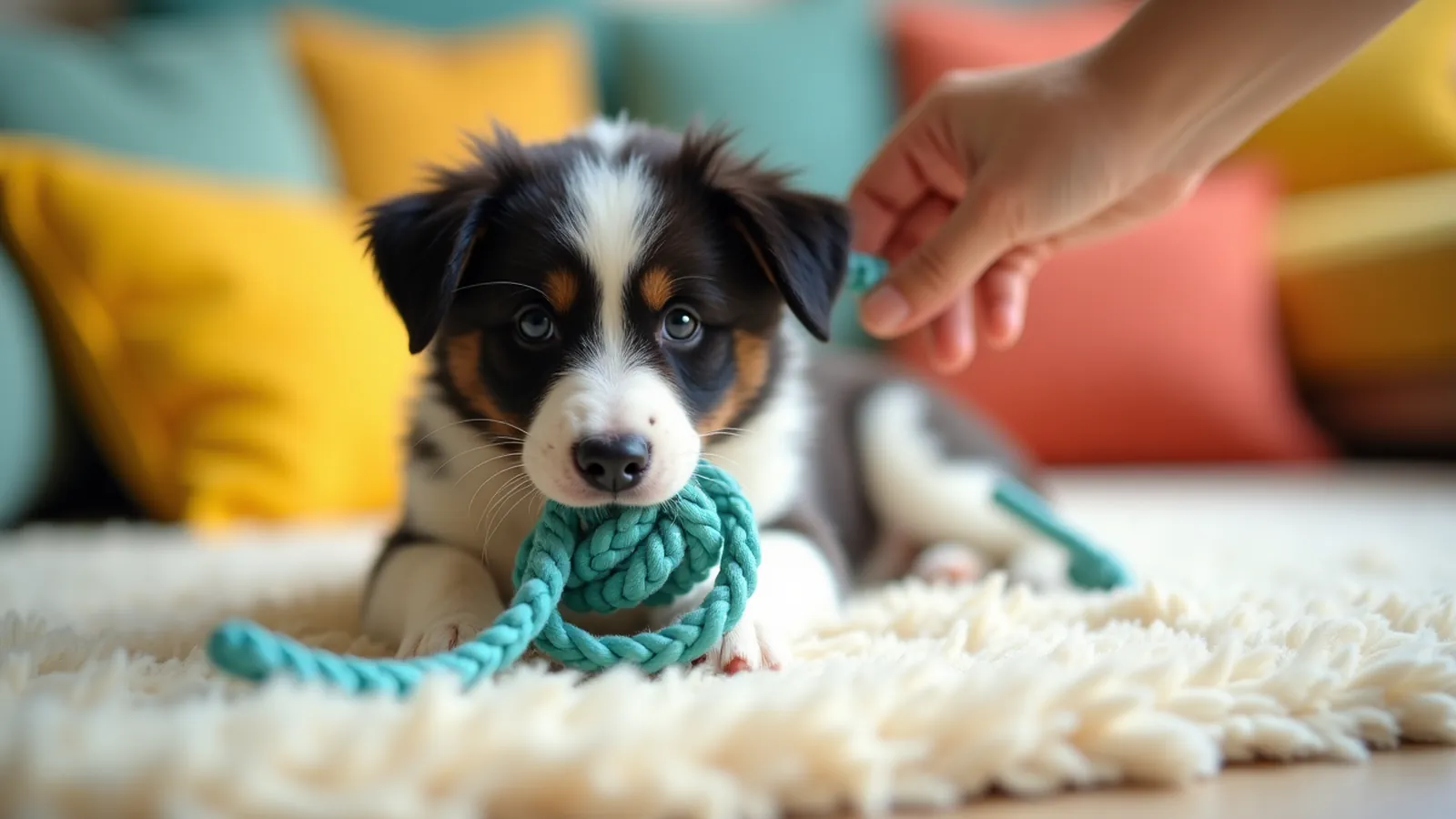
As soon as your puppy lets go or pauses, offer the tug toy by moving it along the floor, and praise when the teeth land on it. Dogs Trust suggests staying still and redirecting in that brief pause, rather than trying to pull free mid-bite. When you stroke your puppy and it gets mouthy, the ASPCA suggests feeding small treats from your other hand so being touched becomes calm, not a game.
Move on when: your puppy often looks for the toy itself when it feels like biting.
Raise the bar one level at a time
Once really hard bites are rare, the ASPCA suggests tightening the rules: pause play for moderately hard bites too, then the next-hardest, until your puppy mouths with little or no pressure. Later, give a time-out every time teeth touch skin: walk away, and if your puppy follows and keeps nipping, leave the room for 30 to 60 seconds, then come back calmly.
Move on when: teeth on skin are rare and soft.
Teach what to do instead of biting
Ask for a sit or a lie down before each play session and reward it with the game. VCA's behaviorists recommend this so calm behavior, not biting, starts the fun. Play tug with a rule: the game stops the instant teeth touch skin or clothing. Everyone in the house needs the same rules.
Keep going: for life. Calm behavior that earns play is a habit worth keeping.
The New Puppy start-here page lays out the rest of the first weeks in order.
Why a weekly class may not have fixed it
A class can coach you, but the biting happens at home between sessions, and Blue Cross notes that overtired puppies get irritable and nippy. The fix is the daily routine above, repeated the same way by everyone in the house.
Keep a biting log
Blue Cross suggests writing down the times and events that set the biting off, so you can have a nap, chew or snack ready before it starts. Copy this into a notebook or your phone:
| Time | What happened just before | Hard, medium or soft | What ended it |
|---|---|---|---|
| Example: 6:50 p.m. | Back from a walk, dinner due at 7 | Hard, on pant legs | Stuffed toy in the pen, then a nap |
Yelp, freeze or time-out? Comparing the common methods
Advice conflicts, so here is what each source says. Choose by how your own puppy responds.
| Method | What the sources say | Use it when |
|---|---|---|
| Yelp or "ouch" | The ASPCA and VCA suggest a sharp yelp or "ouch" so the puppy backs off. Blue Cross advises against high-pitched squealing because it tends to excite puppies into more biting. The ASPCA limits yelping to three times in 15 minutes. | Try it briefly. If your puppy bites harder or gets wilder, drop it and use the freeze and pause instead. |
| Freeze and go limp | The ASPCA, Blue Cross and Dogs Trust all say to avoid pulling hands or feet away, because movement invites more grabbing. | Every bite. This is the default. |
| Redirect to a toy | The ASPCA, VCA, Blue Cross and Dogs Trust all recommend redirecting to a toy; Dogs Trust says to do it in a pause, and the ASPCA adds praise. | As soon as your puppy lets go, and before known trigger times. |
| Short time-out | The ASPCA suggests 10 to 20 seconds for hard bites at first, later 30 to 60 seconds out of the room. Blue Cross suggests a calm break behind a stair gate, and not using the crate for this. | When biting continues after you freeze and redirect. |
| Shouting, tapping the nose, physical punishment | Not recommended. The ASPCA says slapping or hitting can make puppies bite harder and cause fear. Dogs Trust says raised voices increase frustration and fear. AVSAB advises against intimidation and physical correction. | Never. |
Common biting triggers and what to do
| When it happens | Likely cause | What to try |
|---|---|---|
| Wild biting and zooming late in the day | Overtired | Calm it down with a chew or stuffed toy in a quiet spot, then a nap. |
| Just before meals | Hungry | Check the meal schedule with your vet; Blue Cross notes puppies need several meals a day. |
| When you walk or wear a dressing gown | Moving target | Stop walking, offer a tug toy, change clothes for now. |
| After visitors, play or a walk | Too much excitement | Dogs Trust suggests calming activities: sniffing, licking, chewing. |
| Chewing furniture and shoes | Teething | Offer suitable chews; puppy-proof the room. |
An evening bitey spell, step by step
After a busy afternoon, a ten-week-old puppy starts racing around at 7 p.m., grabbing pant legs and hands. The owner stands still, which ends the chase. When the puppy lets go for a second, the owner drags a long tug toy across the floor and plays for a minute, pausing the game each time teeth touch skin.
The biting keeps coming back, so the owner reads it as tiredness and gives the puppy a stuffed food toy in its pen and dim the lights. Ten minutes later the puppy is asleep. The next day the owner offers the chew and a quiet spot at 6:30 p.m., before the zoomies start.
Puppies, children and visitors
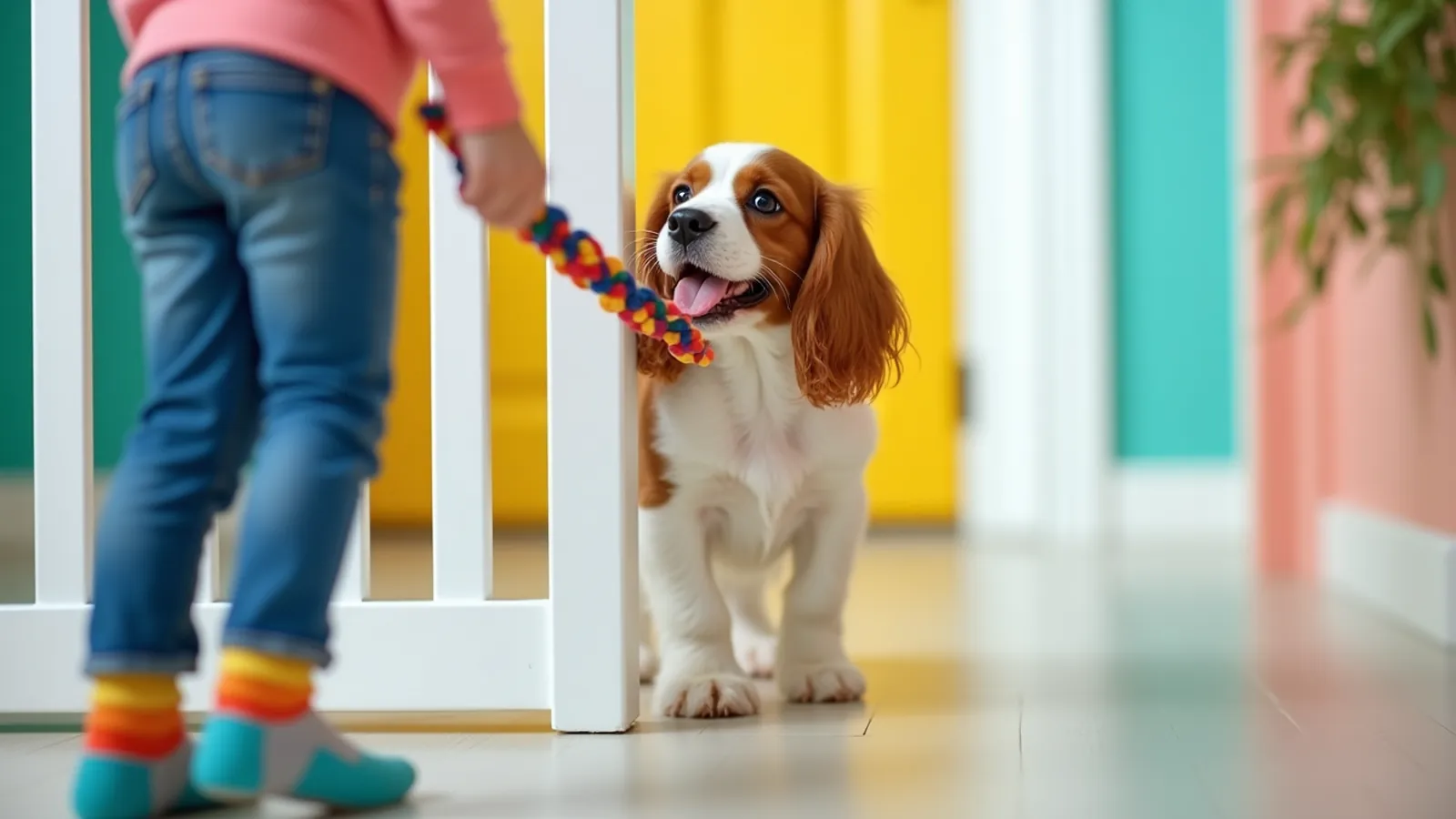
Blue Cross says children shouldn't be expected to manage play biting on their own: supervise closely, and when you can't, keep puppy and children apart with a stair gate or pen. Teach everyone one rule: if teeth touch you, go still and call an adult.
Troubleshooting: if the biting isn't getting better
- If your puppy bites harder when you say "ouch"
- Your noise is exciting them. Stop yelping, go still and silent, then redirect or step behind a gate.
- If your puppy follows you and bites your ankles when you walk away
- Carry a tug toy in your pocket. The ASPCA suggests stopping your feet, waving the toy, and moving again once your puppy grabs it.
- If time-outs turn into a chase
- Don't pick the puppy up and carry it off; VCA notes this can feel like more play. Step over a baby gate yourself, or use the light house line on a harness that Blue Cross suggests, only while you supervise.
- If the biting is worst with one family member
- VCA notes that rough play with hands teaches a puppy that hands are toys. Agree one set of rules.
Watch for
Play biting comes with a loose, wiggly body. The ASPCA describes tantrums where the body goes stiff or frozen, lips pull back and bites are much more painful, often when the puppy is held or handled. Dogs Trust adds growling and a tense face and body. Don't yelp at these moments; stay calm and plan to get help.
When to get professional help
Stop and call for help if
- A bite breaks skin, or you or a child are getting hurt.
- Your puppy stiffens, freezes, curls its lips or growls before biting, or bites when held, handled or groomed.
- You suspect your puppy is sore or unwell. Dogs Trust links biting to pain as well as excitement and frustration, so ask your vet to check.
- Mouthing feels intense, is hard to interrupt, or worries you. Dogs Trust advises getting support early, before it gets worse.
Who to call. Start with your veterinarian: pain, illness and medication side effects can all show up as behavior changes. For behavior problems, look for a board-certified veterinary behaviorist (ACVB directory), a certified applied animal behaviorist, or a certified behavior consultant, for example through the IAABC or the CCPDT directories. Ask any trainer which methods they use; reward-based is what the American Veterinary Society of Animal Behavior recommends.
The ASPCA says repeated biting in frustration is not something a puppy simply grows out of, so get it assessed early. For ordinary play biting, a reward-based puppy class is a sensible step. AVSAB says puppies can start socialization classes as early as 7 to 8 weeks of age, with at least one set of vaccines at least seven days before the first class, a first deworming, and vaccines kept up to date during the class; ask your vet what suits your puppy. The puppy socialization checklist covers what to look for in a class.
Biting, night crying and accidents: one routine
Biting, crying in the crate and accidents on the carpet often arrive together in the first weeks. Regular rest, meals and play help with the biting (Blue Cross), and the guides below cover the other two. A pen or crate your puppy likes gives you a calm place for naps, so read how to crate train a puppy next. For bedtime, use the night routine for a puppy crying in the crate, and keep toilet trips on time with the puppy potty training schedule. If your puppy also leaps at visitors, see how to stop your dog jumping on people.
Frequently asked questions
At what age do puppies stop biting?
Blue Cross says the vast majority of puppies grow out of mouthing and play biting by around three to five months old. Teething can add extra chewing until the adult teeth are in, usually by about seven months according to Dogs Trust. Every dog is different.
Should I yelp when my puppy bites?
Sources disagree. The ASPCA and VCA suggest a sharp yelp or "ouch" so the puppy backs off; Blue Cross says high-pitched noises tend to excite puppies and can lead to more biting. Try it a couple of times; if your puppy bites harder, switch to going still and silent, then redirect to a toy.
Is my puppy biting because of teething?
Partly, sometimes. VCA's behaviorists say nipping and mouthing are mainly social play, while teething shows up more as chewing objects. Dogs Trust notes puppies may chew more while teething because sore gums feel better when they chew. Offer suitable chews, and talk to your vet if your puppy seems uncomfortable.
Sources
- Mouthing, Nipping and Biting in Puppies, ASPCA (accessed October 27, 2026).
- Play Biting in Puppies, Debra Horwitz, DVM, DACVB and Gary Landsberg, DVM, DACVB, VCA Animal Hospitals (accessed October 27, 2026).
- How to Deal with a Mouthy Puppy, VCA Animal Hospitals (accessed October 27, 2026).
- Puppy Biting and Mouthing, Blue Cross (accessed October 27, 2026).
- Mouthing, Nipping and Puppy Biting, Dogs Trust (accessed October 27, 2026).
- Position Statement on Humane Dog Training, American Veterinary Society of Animal Behavior, 2021 (accessed October 27, 2026).
- Position Statement on Puppy Socialization, American Veterinary Society of Animal Behavior (accessed October 27, 2026).
New puppy? Start here
The first weeks with a puppy in the order that matters: sleep, toilet trips, the crate, biting and socialization.