
New Puppy
Puppy crying in the crate at night: a calm plan, step by step
The door latches, the howling builds, and at 2 a.m. someone gives in and opens it. This plan is built to break that loop: it helps your puppy settle beside you, puts night toilet trips on a timetable, and shows when crying is not ordinary.
On this page (9 sections)
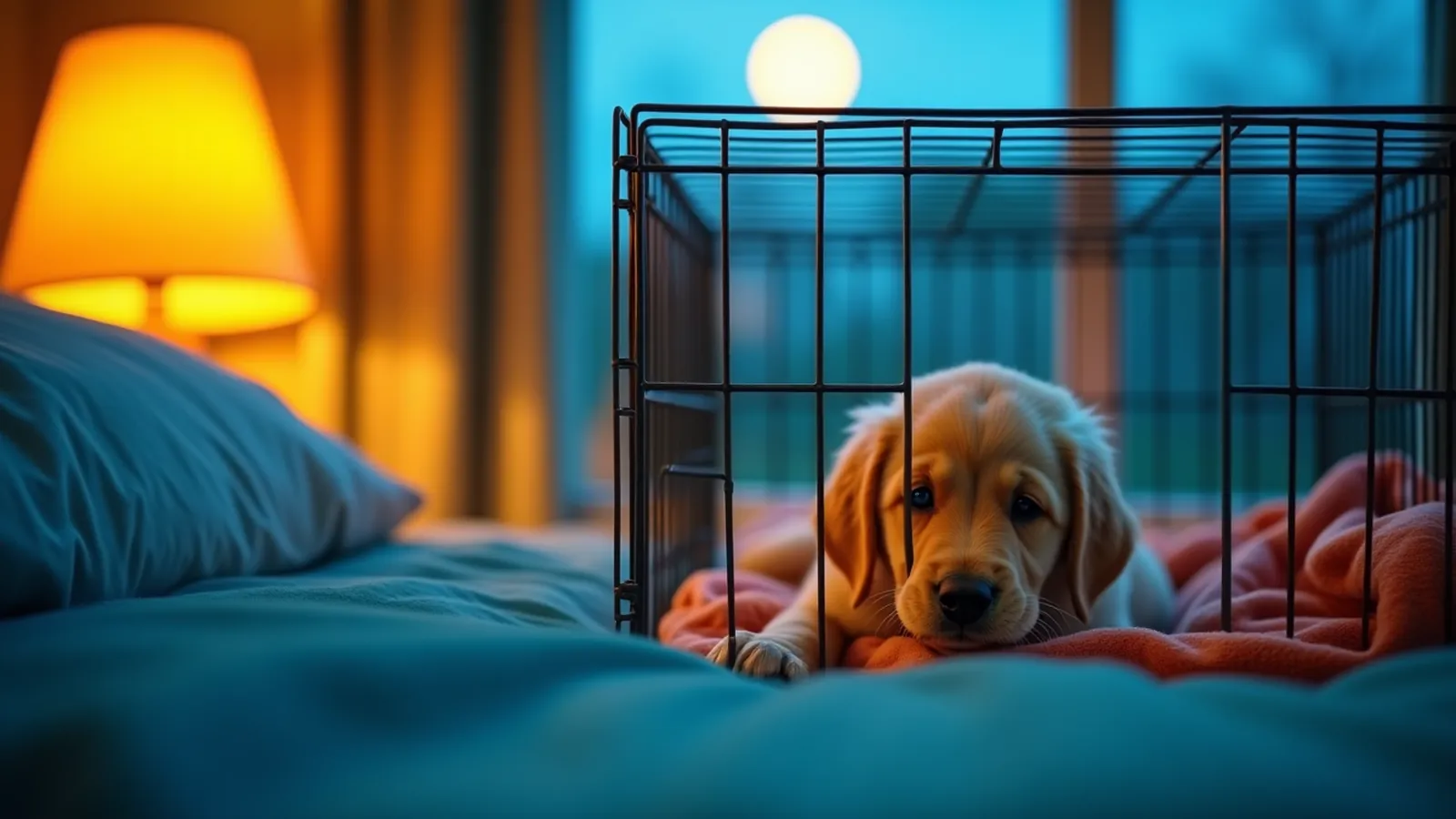
A puppy crying in the crate at night is usually a young dog sleeping alone for the first time. Often they also need a toilet trip, and sometimes they were shut in before they were ready for the door to close. You can help by moving the crate right beside your bed, building a calm bedtime routine, taking quick, boring toilet trips on time, and, if the crying starts the moment the door latches, not latching it yet.
If you were up until 2 a.m. and nobody in the house is sleeping, this is not a sign you have failed or that your puppy is "bad". Dogs Trust points out that your puppy is probably used to sleeping with littermates and may need time to get used to a bed of their own. The plan below follows Dogs Trust, Humane World for Animals, the RSPCA and VCA Animal Hospitals. Every puppy is different, so go at your puppy's pace.
Key takeaways
- Put the crate or bed beside your bed for now. Humane World and Dogs Trust both start there.
- Young puppies need night toilet trips. VCA suggests at least every 2 hours for a 2-month-old.
- Keep night trips calm and boring: out on a lead, toilet, praise, straight back.
- Short, mild fussing that is fading can be given a few minutes to settle. Escalating, panicked crying cannot.
- If the cry starts when the door latches, the closed door may be the trigger. Leave it unlatched at night and practice the door in daytime.
- Never punish crying. Drooling, frantic escape attempts or injury mean stop and call your vet.
Tonight, in short
- Busy day, quiet evening, curtains closed.
- Last toilet trip, then into a cosy crate beside your bed with a chew that is safe to leave.
- Cry? Pause, listen, and use the cry table below to decide.
Why puppies cry in the crate at night
A new puppy has just lost the warmth and company of littermates, and night is the first time they are expected to sleep alone in a strange place. On top of that, a young puppy's bladder can't last the night: VCA advises taking a 2-month-old puppy out at least every two hours, even overnight. And if the crate was introduced in a rush, the closed door itself can be what your puppy is protesting. Each cause has a different fix, which is why "just ignore it" and "always go to them" both fail some puppies.
The night plan for a puppy crying in the crate
Give your puppy a full day
Dogs Trust says a puppy with a full day of activities is more likely to sleep well at night: walks as your vet advises, play, and short, fun training sessions between naps. Practise the crate in daytime too, with the door open, using the steps in how to crate train a puppy.
Use the same calm evening routine every night
Dogs Trust suggests doing the same kinds of activities each evening so your puppy learns what to expect, closing the curtains and keeping things quiet. If your puppy suddenly races around at bedtime (the "zoomies"), Dogs Trust says they probably need sleep, not more exercise.
Last toilet trip, then bed
Take your puppy out to toilet right before bed and praise them when they go. Humane World suggests putting your puppy in using your usual cue and a treat. Make the bed soft and washable, and give a chew or food toy that is safe to leave with your puppy unsupervised.
Crate beside your bed, door unlatched if needed
Humane World suggests the crate in your bedroom or a nearby hallway at first, so you can hear when your puppy needs to go out. If your puppy already accepts a closed door in daytime, close it. If they cry the moment it latches, Dogs Trust's approach fits better: Dogs Trust advises avoiding shutting a puppy in the crate at night, and notes that a playpen can suit nights because it gives more room. Put the open crate inside a pen beside your bed.
When crying starts, pause and listen
Use the cry table in the next section. VCA's behaviorists say that if vocalising is brief and doesn't escalate, give your puppy a few minutes to see if they settle, because you don't want your puppy to expect the crate to open every time they cry. The RSPCA suggests waiting for even the smallest gap in the noise before you let a puppy out.
Make toilet trips boring
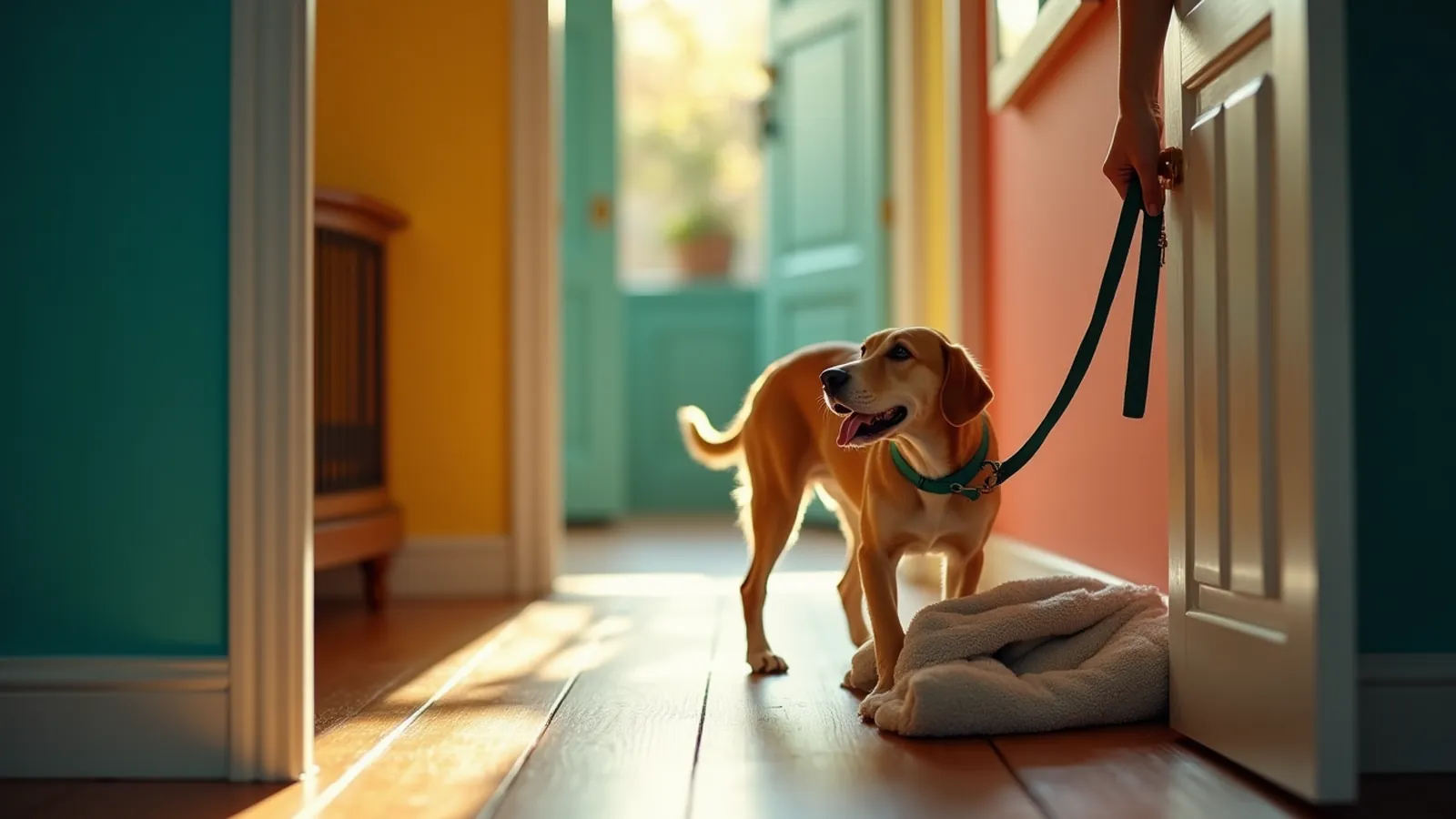
If your puppy was sleeping quietly, then wakes and starts to fidget or cry, consider whether they need to toilet, as VCA suggests. Take them out on a lead to the usual spot, wait, praise, then go straight back to the crate with a small treat. No play, no chat, lights low. Humane World calls it a trip with a purpose, not playtime.
Move the crate away slowly, later
Once your puppy sleeps comfortably through the night beside you, Humane World says you can gradually move the crate to where you want it. Dogs Trust describes two ways: move the puppy's bed a little further away every few nights, or sleep near the puppy's bed and move your own bed away every few nights. If crying returns, Dogs Trust says go back to sleeping in the same room and move more slowly.
Night crying often travels with day-time biting and accidents in a tired new puppy. The New Puppy start-here page puts sleep, toilet trips and the crate in order.
Should you ignore a puppy crying in the crate? Use the cry table
Sources disagree here, and it helps to know it. VCA's crate-training article by two veterinary behaviorists advises not going to a puppy that cries after being put in its crate at bedtime. Humane World suggests ignoring whining only if your puppy has never been let out for whining before, and offering a toilet trip if it carries on for several minutes. Dogs Trust advises sleeping in the same room and slowing down if a puppy cries. The table below combines them by type of cry.
The one rule: go to your puppy for a need (a toilet trip, or real distress), keep it calm and brief, and wherever you can, let a moment of quiet, not crying, be what opens the door.
| What you notice | Possible meaning | What to do |
|---|---|---|
| Short whimpers that fade within a few minutes | Settling down | Stay quiet and wait. Open nothing until there is a gap in the noise. |
| Puppy was asleep, then wakes, fidgets and whines | Needs the toilet | Calm toilet trip on a lead, then straight back to bed (VCA). |
| Crying keeps going after several minutes, getting louder | Toilet, or you moved too fast | Offer a toilet trip (Humane World). If it isn't that, sit by the crate quietly or leave the door unlatched, and slow the plan down (Dogs Trust). |
| Crying starts the moment the door latches | The closed door may be the trigger | Don't latch at night for now. Practise the door in short daytime sessions. |
| Drooling, frantic scrabbling, trying to escape, not settling at all | Distress | Let your puppy out, stop for the night, and talk to your vet (VCA). |
Watch for
Leaving a young puppy to cry all night also skips the overnight toilet trips VCA recommends for 2- and 3-month-olds. And never punish crying: Humane World says never punish whining, whatever else you may read.
Overnight toilet trips by age
Sources give different ages for sleeping through the night, so treat these as ranges. VCA's behaviorists note there is a great deal of individual variability.
| Age | What VCA suggests |
|---|---|
| About 2 months (8 to 9 weeks) | Out at least every 2 hours, even overnight (VCA puppy guide) |
| About 3 months | Out every 3 hours (VCA puppy guide). VCA's crate article says many puppies can last through the night by about 3 months. |
| Up to about 6 months | A puppy may not be comfortable in the crate all night until around 6 months (VCA puppy guide) |
Setting a quiet alarm for these trips means you reach your puppy before the crying starts, so crying is not what gets them out. The puppy potty training schedule covers the daytime trips that make nights easier.
A 9-week-old puppy has been crying from the moment the crate latches at 10:30 p.m., and the owner has been letting the puppy out after twenty minutes of howling. The owner changes three things. The crate goes beside the bed with the door open inside a small pen, and the evening becomes the same quiet routine every night. An alarm is set for two-hour toilet trips: lead on, garden, praise, back to bed, no play.
When the puppy whimpers, the owner waits for a gap in the noise and lowers a hand by the pen. The door closing is practiced only in the daytime, with a chew. Once the puppy has slept through quietly beside the bed for several nights, the owner starts closing the door at bedtime, and later moves the crate a little further away every few nights.
Troubleshooting
- If your puppy is quiet in the bedroom but cries when the crate is moved out
- You moved too fast. Dogs Trust says go back to sleeping in the same room and move away more slowly than before.
- If your puppy wakes at the same time every night
- That may be a toilet need. Get there just before that time with a calm trip, as VCA describes.
- If your puppy wants to play after a night trip
- Keep it dull: lead on, no games, lights low, straight back with a small treat. VCA says calm, brief breaks teach a puppy that waking the family doesn't lead to playtime.
- If your puppy cries in the crate in the daytime too
- The crate itself isn't comfortable yet. Go back to the daytime steps in the crate training guide and use an open bed or pen at night meanwhile.
- If you have tried everything for weeks and your puppy is still distressed
- Dogs Trust says ongoing crying or distress may mean your puppy is struggling with separation anxiety, and advises an accredited behaviorist through your vet.
When to get professional help
Stop and call for help if
- Your puppy drools, cries persistently, tries hard to escape or can't settle. VCA advises consulting your veterinarian before continuing crate training.
- Your puppy hurts itself on the crate or panics. Humane World notes a dog may get injured trying to escape.
- Crying or distress carries on despite a slow plan, or appears whenever your puppy is left alone. Dogs Trust advises an accredited behaviorist through a vet referral.
Who to call. Start with your veterinarian: pain, illness and medication side effects can all show up as behavior changes. For behavior problems, look for a board-certified veterinary behaviorist (ACVB directory), a certified applied animal behaviorist, or a certified behavior consultant, for example through the IAABC or the CCPDT directories. Ask any trainer which methods they use; reward-based is what the American Veterinary Society of Animal Behavior recommends.
The difference between ordinary night crying and alone-time distress is covered in dog separation anxiety training.
Frequently asked questions
How long will my puppy cry in the crate at night?
No source gives a fixed number of nights. Dogs Trust says every puppy is different and will need varying amounts of time before they are comfortable sleeping alone, so go at your puppy's pace. Dogs Trust lists signs a puppy is settling in, such as more relaxed body language and starting to anticipate the daily routine.
Should I put the crate in my bedroom?
At first, yes. Humane World suggests the bedroom or a nearby hallway so you can hear when your puppy needs to go out, and Dogs Trust's two methods both start with the puppy close to you. Once your puppy sleeps comfortably through the night, move the crate gradually.
Should I cover the crate at night?
It can help some puppies. The RSPCA says a cover over part of the crate can help nervous dogs, and Dogs Trust suggests a blanket over the top and sides to keep out draughts and reduce outside sounds. Leave airflow and keep your puppy's water in reach.
Is it okay to take my puppy into my bed instead?
That is your choice, but it changes the plan. The aim of this guide is a puppy who sleeps calmly in their own space. Dogs Trust's "sleepover" method gets you close without sharing a bed: sleep beside your puppy's bed and move your own bed away every few nights.
Sources
- First Nights With a New Puppy, Dogs Trust (accessed October 27, 2026).
- How to Settle Your Puppy Into Your Home, Dogs Trust (accessed October 27, 2026).
- Playpen and Crate Training a Puppy, Dogs Trust (accessed October 27, 2026).
- How to Crate Train Your Dog or Puppy, Humane World for Animals (accessed October 27, 2026).
- Crate Training and Confinement for Puppies and Dogs, Ellen Lindell, VMD, DACVB and Monique Feyrecilde, LVT, VTS (Behavior), VCA Animal Hospitals (accessed October 27, 2026).
- How to Crate Train Your Puppy, VCA Animal Hospitals (accessed October 27, 2026).
- How to Crate Train Your Dog, Debra Horwitz, DVM, DACVB and Gary Landsberg, DVM, DACVB, VCA Animal Hospitals (accessed October 27, 2026).
- Playpen and Crate Training a Puppy, RSPCA (accessed October 27, 2026).
New puppy? Start here
The first weeks with a puppy in the order that matters: sleep, toilet trips, the crate, biting and socialization.