
Adult Dog Manners
How to teach a dog recall: five stages from the living room to the park
A dog who ignores you at the park hasn't learned that coming back pays more than the squirrel. These five stages teach that, one level of distraction at a time, with a long line keeping everyone safe.
On this page (8 sections)
If your dog ignores his name and takes off after squirrels at the park while you shout, here is how to teach a dog recall that holds up: start where he can't fail, in your living room, make coming to you the best thing that happens to him, and add distractions one small step at a time, on a long line clipped to a harness, until the park is just the last stage. The San Francisco SPCA puts it simply: dogs don't come when called automatically, however much they love you; the only way to get a reliable recall is to train it.
Shouting louder while other people watch is embarrassing, and it doesn't mean your dog is stubborn or that you have failed. Dogs Trust says that off the lead, a squirrel or another dog can simply seem more exciting than you. The plan below follows Dogs Trust, the RSPCA, the SF SPCA and VCA's veterinary behaviorists, and every stage has a test so you know when to move on.
Have a young puppy?
VCA says recall training can start the moment your puppy comes home, indoors or in a safe fenced area, or on a 6-foot leash. Stages 1 and 2 suit a puppy well. AVSAB's puppy socialization statement says young puppies should avoid dog parks and other areas used by dogs of unknown vaccination status, so ask your vet before Stage 5. If biting and night crying are your real emergencies, start with how to stop puppy biting and come back to recall as a short daily game.
Key takeaways
- Teach your dog's name first, then the recall word (Dogs Trust).
- Never call your dog for something he won't like, and never scold him when he arrives (SF SPCA, VCA).
- Say the cue once. If he doesn't come, make yourself interesting or go and get him.
- Use a long line attached to a harness, never a collar, for anything longer than 6 feet (RSPCA).
- Add distractions gradually: house, garden, quiet field, then busier places (RSPCA).
- VCA says it can take many weeks or months before a dog is ready to come away from distractions.
Do this today
- Pick one recall word that everyone at home will use, and a hand signal such as arms held wide (Dogs Trust).
- Cut a pocketful of small, tasty treats your dog loves more than his usual food.
- Play a short round of the name game in Stage 1 below.
If a class didn't fix it
The RSPCA recommends training classes, but recall is built between classes: in many short repetitions (VCA suggests at least 10 a day) and in the places where your dog actually runs off. The stages below give you those repetitions in order, with a test for each one, so you always know what to practice next.
The recall rules: never call for something bad
Most broken recalls are taught by accident. If "come" often means a scolding, the end of the walk or the end of a game, the RSPCA says your dog is not likely to want to come back. These rules protect your recall word:
- Never call your dog for anything he won't like. That is the SF SPCA's first rule. For a bath, nail trim or medicine, go and get him instead.
- Never scold a dog who comes to you, however long it took. VCA says any past crime should be dismissed once he arrives.
- Call once. Dogs Trust suggests giving at least five seconds to respond before calling again; the RSPCA says if he ignores the first or second call, he probably won't respond to the fifth. Run the other way excitedly or go closer instead.
- Don't call if you don't think he'll come, unless it's an emergency (RSPCA, SF SPCA). Every ignored call teaches him the word is optional.
- Make most recalls a happy surprise. The RSPCA suggests that 95% of recalls be for practice only: call, reward, touch the collar, and let him go again.
The SF SPCA also suggests two words: an everyday "here" or "let's go", and "come" saved for when you need it most.
How to teach a dog recall in 5 stages
Keep sessions short and fun. VCA suggests practicing at least 10 times a day; the SF SPCA suggests about 10 minutes, two or three times a day. Move to the next stage only when the current one is easy, and go back a step whenever your dog struggles (SF SPCA).
Stage 1: the living room and the name game
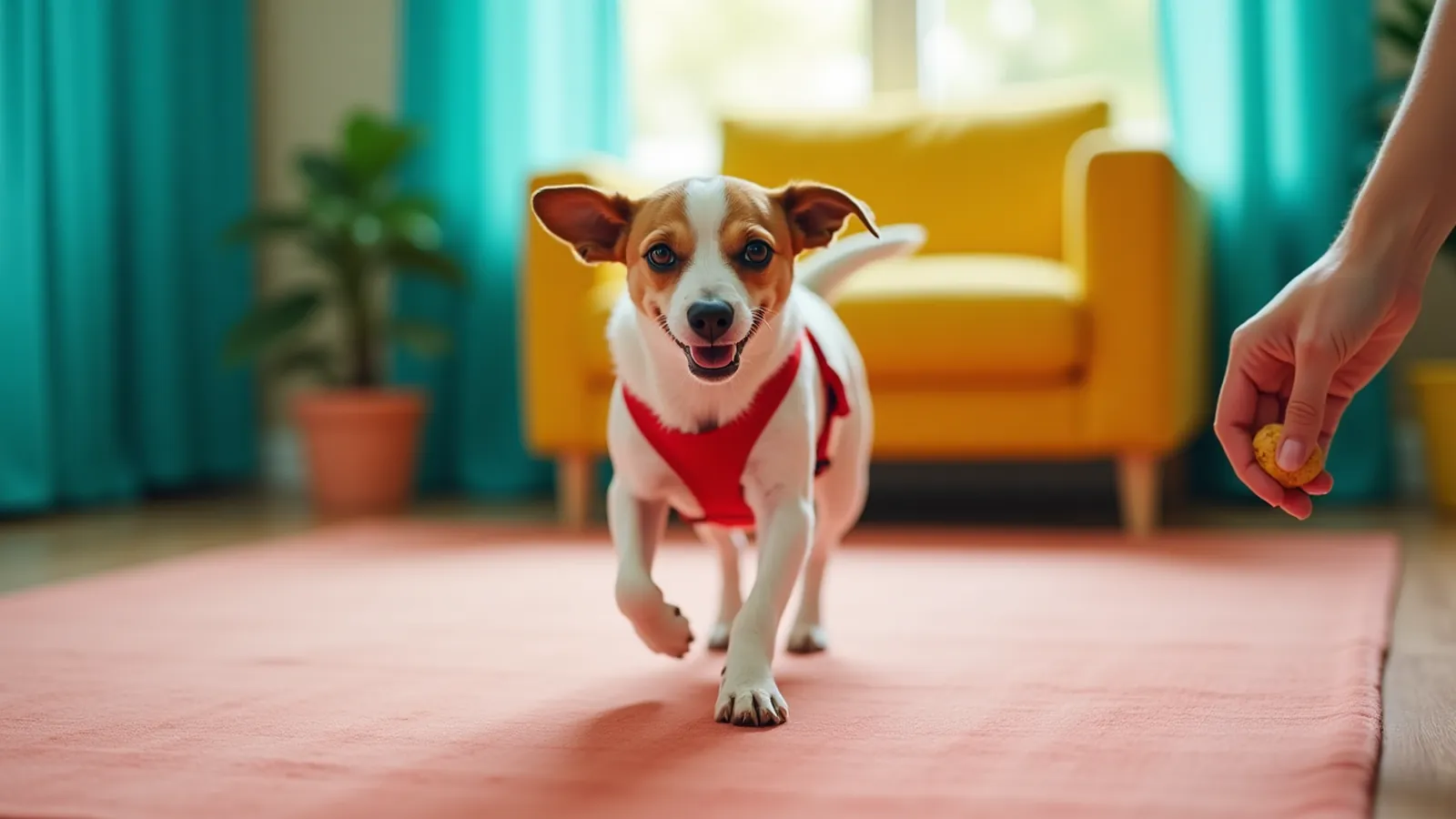
Say your dog's name and reward the moment he looks at you; Dogs Trust teaches the name before the recall cue. VCA's "ping pong" game builds speed: toss a treat a few feet to one side, say his name as he eats it, and toss the next treat to your other side, so he turns at the sound of his name. Then add the recall: say his name, say "come" cheerfully, and back away clapping as he comes (SF SPCA). Reward and ask for a sit.
Move on when: he turns and runs to you every time from a few feet away.
Stage 2: the whole house, and the collar touch
Call from 8 to 10 feet away, then gradually further, and from different rooms when he isn't expecting it (SF SPCA). With a helper, call him back and forth between you. When he arrives, practice VCA's collar touch: feed several treats in a row and briefly, gently touch his collar while he eats, so being held after a recall never feels like a trap.
Move on when: he comes from another room and happily accepts a hand on his collar.
Stage 3: the garden or a quiet open space, on a long line
Clip a long line to a well-fitted harness. The RSPCA says to always use a harness rather than a collar or head collar on any lead longer than 6 feet, and Dogs Trust also attaches the long line to a harness. Let him wander, then call. If he doesn't come, gently guide him in or go and collect him; never pull him towards you (Dogs Trust). If you need to stop him, stand on the line with one foot only, so you can't trip (RSPCA).
Move on when: he comes straight back from the end of the line in a quiet place.
Stage 4: mild distractions, still on the line
Now climb the distraction ladder below, one level at a time. Practise calling him away from things he wants but can't reach, such as his dinner on the counter, then give him the thing as his reward (SF SPCA). The harder the distraction, the better the reward; the RSPCA calls coming away from other dogs a "Class A reward" moment.
Move on when: he comes away from people and calm dogs at a distance, first time.
Stage 5: the park, line first, off-lead last
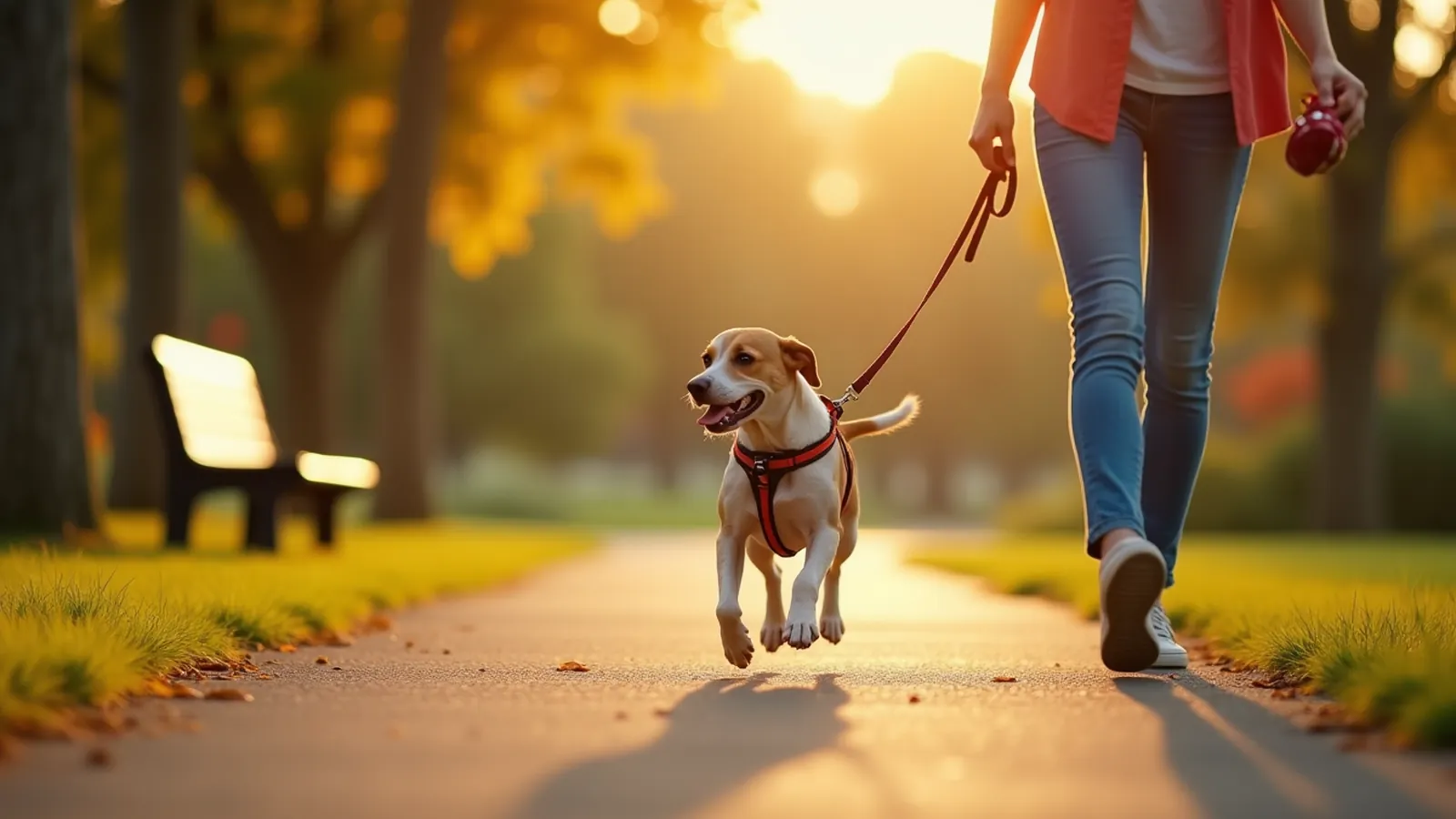
Start at quiet times, on the line. Call often for no reason, reward, and send him back to play, so "come" doesn't always mean going home. The RSPCA warns that dogs spot patterns: if you always clip the lead on in the same place, he will learn not to come there. Dogs Trust says to let him off-lead only in secure areas until you are confident he will come back, and the SF SPCA suggests practicing off-lead in enclosed areas first.
Keep going: keep paying for good recalls. Dogs Trust says you won't need a treat every time, but should still reward every so often.
Choosing the right harness matters for line work; how to choose and fit a harness explains what to look for. The RSPCA mentions long lines of up to 30 feet or more: Long training lines on Amazon (Amazon, affiliate link) opens in a new tab.
The distraction ladder
The RSPCA's order is house, then garden, then a field, then a walk with other dogs and people. The table breaks that into rungs. The SF SPCA's test works for every rung: don't try a harder exercise until the current one is a piece of cake for your dog.
| Rung | Example distraction | Where | Reward | On a line? |
|---|---|---|---|---|
| 1 | None; you and a quiet room | Living room | Small treats | No |
| 2 | A toy on the floor, someone walking past | Whole house | Small treats, a game | No |
| 3 | Smells, a bird overhead | Garden or empty field | Better treats | Yes, on a harness |
| 4 | People and calm dogs at a distance | Quiet park at a quiet time | Best treats or a favorite toy | Yes |
| 5 | Running dogs, squirrels | Busier park | Jackpot: several best treats, then a game | Yes, until reliable; off-lead only in secure areas |
Checklist before you unclip the line
- He comes first time from the end of the line at rung 5, in that kind of place.
- He is happy to have his collar or harness held when he arrives (VCA).
- The area is secure or enclosed (Dogs Trust, SF SPCA), with no road, livestock or large animals nearby (VCA).
- You can call once, calmly, and expect him to come (RSPCA, SF SPCA).
If any box is unticked, keep the line on. That isn't failing; it's the plan.
A two-year-old dog chases squirrels at the park. For a week his owner plays the name game indoors, paying with chicken. In the garden, on a long line and harness, he comes back nine times out of ten. At a quiet park a squirrel wins; the owner stands on the line and goes back to calling from further from the trees. Weeks later he turns away from a distant squirrel for a jackpot. He is still on the line near trees, and that is the plan working.
Troubleshooting
- If he ignores his name
- Go back to Stage 1 and make his name worth turning for. VCA suggests using your dog's name only when you are in a pleasant frame of mind.
- If he comes, but stops just out of reach
- Practise the collar touch indoors (VCA). The SF SPCA says to touch the collar before giving the treat when he arrives.
- If he takes off after squirrels or other dogs
- Keep him on the long line in those places. The RSPCA says not to walk a dog who runs off without a lead while you work on recall, because the more he runs off and has fun, the more he will want to.
- If he comes slower at the end of walks
- "Come" has started to mean "fun is over". Call often during the walk, reward, and release him again (RSPCA).
- If you lost your temper and shouted
- It happens. Start again with easy, well-paid recalls; Dogs Trust says getting angry or shouting will make your dog not want to come back.
Watch for
No recall is perfect. VCA says to keep your dog on a leash wherever a large animal or a vehicle could cross his path. This site never recommends shock or e-collars, and the evidence doesn't support them: in a 2020 study of 63 dogs with poor recall, China and colleagues found that trainers focused on positive reinforcement got better responses to "come" after a single instruction than trainers using e-collars, and concluded there was no evidence e-collar training is necessary. The study has been debated in a published commentary, but AVSAB also advises against aversive methods.
When to get professional help
Stop and call for help if
- Your dog chases and grabs other animals, or you can't keep him safe near roads, livestock or wildlife.
- He growls, snaps or lunges at dogs or people when you call him away or reach for his harness.
- He suddenly stops responding when he used to come reliably. Your vet can check for a medical cause first.
- You aren't seeing an improvement with steady practice. Dogs Trust suggests a qualified trainer or behaviorist.
Who to call. Start with your veterinarian: pain, illness and medication side effects can all show up as behavior changes. For behavior problems, look for a board-certified veterinary behaviorist (ACVB directory), a certified applied animal behaviorist, or a certified behavior consultant, for example through the IAABC or the CCPDT directories. Ask any trainer which methods they use; reward-based is what the American Veterinary Society of Animal Behavior recommends.
AVSAB recommends that problems involving aggression or fear are seen by a veterinarian first, so medical conditions can be ruled out, and treated with reward-based methods.
Frequently asked questions
How long does it take to teach a dog recall?
There is no fixed time. VCA says it can take many weeks or months of practice before a dog is ready to respond to a recall cue with distractions around. Progress through the stages by your dog's success rate, not the calendar, and keep practicing even after it works.
Should I use a long line on a collar or a harness?
A harness. The RSPCA says to always use a harness rather than a collar or head collar if your lead is longer than 6 feet, and Dogs Trust attaches the long line to a harness during recall training. Never use the line to drag your dog in.
How do you teach a deaf dog recall?
Use a visual signal as the cue. VCA notes that a recall cue can be a word, a sound or a visual signal, and Dogs Trust suggests a visual cue such as arms held wide in case your dog can't hear you. Get his attention gently first, then teach the signal with the same five stages and a long line.
Should I work on recall while my puppy still bites and cries at night?
Yes, in small doses. VCA says recall training can start the moment a puppy comes home, and Stage 1 is a short indoor game that fits between naps and toilet trips. Keep sessions short and fun.
Can I teach an older or rescue dog recall?
Yes. The same principles apply at any age: start at an easy stage and keep him on the line for longer. A newly adopted dog needs to settle first, so start once he is relaxed with you; see settling a new rescue dog. Keep him on the line until his recall is reliable in each place.
Sources
- Recall Training: Come Back When Called, Dogs Trust (accessed October 27, 2026).
- Teaching your dog recall, RSPCA (accessed October 27, 2026).
- Recall Command, San Francisco SPCA (accessed October 27, 2026).
- Training Your Puppy to Come, Wait, and Follow, Ellen Lindell, VMD, DACVB, Monique Feyrecilde, LVT, VTS (Behavior), Debra Horwitz, DVM, DACVB and Gary Landsberg, DVM, DACVB, VCA Animal Hospitals (accessed October 27, 2026).
- Efficacy of Dog Training With and Without Remote Electronic Collars vs. a Focus on Positive Reinforcement, China, Mills and Cooper, Frontiers in Veterinary Science, 2020 (accessed October 27, 2026).
- Position Statement on Puppy Socialization, American Veterinary Society of Animal Behavior (accessed October 27, 2026).
- Position Statement on Humane Dog Training, American Veterinary Society of Animal Behavior, 2021 (accessed October 27, 2026).
Fixing everyday manners? Start here
Pulling, jumping up and recall, taught with rewards, in the order that makes each one easier.