
Rescue Dog
The 3-3-3 rule for a rescue dog, with a first-week plan for a dog who hides
Three days to decompress, three weeks to learn your routine, three months to feel at home. It is a rough guide, not a deadline, and the plan below works at your dog's pace.

On this page (10 sections)
- What the 3-3-3 rule for rescue dogs means
- Rescue dog first week: a day-by-day plan
- Rescue dog decompression for a dog who hides and flinches
- If your rescue dog won't eat in the first few days
- Is the 3-3-3 rule real?
- Troubleshooting the first weeks
- When to get professional help
- Frequently asked questions
- Keep going
- Sources
It's day two, your new dog is still behind the couch, he won't come out for food and he flinches when a hand reaches toward him. The 3-3-3 rule for a rescue dog explains what is going on: a newly adopted dog needs about three days to decompress, three weeks to learn your routine and three months to feel at home, and the San Francisco SPCA lists hiding, avoiding eye contact and not eating much as possible normal responses to fear and stress.
It is hard to watch, and it doesn't mean you chose the wrong dog. The SF SPCA calls the rule a guideline and says not all dogs follow its timeline exactly. What helps is a quiet, predictable week in which nothing is forced, so your dog learns that the house is safe and that you are the source of good things. The plan below follows the SF SPCA, Dogs Trust and Best Friends Animal Society. (Brought home a puppy instead? Start with the New Puppy guide.)
Key takeaways
- The 3-3-3 rule is a shelter rule of thumb, not a scientific timeline. Every dog is different.
- Hiding in the first days is common; Dogs Trust calls it perfectly normal. Never disturb him in his den.
- Let him come to you. Keep your hands at your side; don't reach, grab or pull him out.
- Leave food and water near his hiding place, then leave the room.
- Eating little at first is common. The feeding section below says when to call your vet or the rescue.
Do this today
- Set up a den in a quiet corner: a bed, water, a chew and, if he likes it, an open crate he can choose.
- Write down set times for meals, toilet trips and a short walk, and keep to them.
- Sit in his room, look away and toss a treat now and then. Expect nothing back.
What the 3-3-3 rule for rescue dogs means
The SF SPCA splits the transition into three stages: the first three days for adjusting to new surroundings, the next three weeks for building a routine and starting reward-based training, and the first three months for deepening trust. Dogs Trust suggests a settling-in diary for those three months.
| Stage | What you may see | What helps | Call your vet or get help if |
|---|---|---|---|
| First 3 days | Hiding, avoiding eye contact, not eating much, not wanting to interact (SF SPCA, Dogs Trust) | A quiet home, an undisturbed den, no visitors, food left near his hiding place | He hasn't eaten for more than 12 hours, or seems unwell (VCA) |
| First 3 weeks | More comfort and personality; some new behavior, such as barking or chewing (SF SPCA) | A steady routine, short and fun reward-based training, daily enrichment | Escalating behavior, decreased appetite, lethargy, social withdrawal or vomiting (SF SPCA) |
| First 3 months | Growing trust (SF SPCA); some behaviors still changing (Bohland et al.) | Slowly meeting new people and pets; car rides and park visits, one at a time | Growling or snapping, panic when left alone, or fear that is getting worse |
Rescue dog first week: a day-by-day plan
Treat the days as an order, not a schedule. If your dog isn't ready for the next step, stay where you are. The SF SPCA says a dog who starts refusing treats is uncomfortable, and that it is time to take a step back.
Day 1: arrive quietly and show him his den
Dogs Trust suggests a den in a quiet space away from busy parts of the house, and dog-proofing the rooms he will use; Best Friends suggests a quiet room for the first few days for very fearful dogs. Offer a toilet trip, show him the den, put water and a little food nearby, and leave him alone, peeking in now and then. Show him his bed during the day so he knows where it is at night.
Move on when: he has had a few hours of peace. That is all Day 1 needs.
Day 2: start the routine
Feed, go out and rest at the same times each day; Best Friends calls a schedule he can depend on a critical part of building trust. Dogs Trust suggests short walks in the same place for the first few days. Use a harness and lead that fit well (see how to check harness fit).
Move on when: he goes out and comes back to the den without a struggle.
Day 3: be boring company
Sit on the floor in his room at a distance he accepts. Best Friends suggests reading aloud softly and placing treats on the floor at varying distances around you, and says this can take minutes or months. Look away while he eats.
Move on when: he eats treats while you are in the room.
Days 4 and 5: let him choose contact
Slowly shorten the distance between the treats and you, as Best Friends describes. When he approaches, Dogs Trust says keep your hands at your side; if he leans in, stroke his chest or shoulders for three to four seconds, then stop and wait to see if he wants more. Add a food puzzle to the den; Dogs Trust says food enrichment builds confidence without constant interaction.
Move on when: he comes to you, sits nearby or drops a toy at your feet.
Days 6 and 7: widen his world a little
Best Friends suggests moving a fearful dog's safe spot, after a few days, to an area with some household activity but not a lot. Keep visitors away for now, register with your vet and update the microchip details (Dogs Trust), and introduce other pets slowly. The SF SPCA places training in the three-week stage, so keep any games short and easy.
Keep going: repeat what worked. Progress comes in small steps.
Rescue dog decompression for a dog who hides and flinches
Best Friends says hiding in newly rescued puppy-mill dogs can last days or weeks, with the dog coming out only at night for food and water. Your dog's past may differ, but the approach is the same: protect him from what frightens him and let him set the pace. Don't pull him out or reach under the couch, and don't let visitors try to win him over. Best Friends advises moving slowly and keeping sudden noises to a minimum.
Best Friends says many rescued puppy-mill dogs are uncomfortable with human touch, and some are terrified of it. It suggests letting the dog decide when it's time for contact, and occasionally edging your hand, leg or body a little closer, so he learns that nearness is no cause for alarm. Never punish growling, freezing or hiding: AVSAB warns that aversive methods can increase fear and avoidance and make dogs less likely to interact with people at home.
Why start at home, not in a class
The SF SPCA places training in the three-week stage, after the first days of decompression, and says to step back whenever a dog refuses treats. A busy group class can be too much for a dog who is still that worried, so the first week happens at home, in short, quiet moments. This plan uses what shelters themselves advise and tells you when to call a professional.
If your rescue dog won't eat in the first few days
An untouched bowl is worrying. The SF SPCA lists not eating much among possible normal responses to fear and stress in the first days, but appetite loss can also be a sign of illness, so you need both a gentle plan and a clear line for calling the vet. The plan:
- Keep his usual food. Dogs Trust suggests asking the rescue what he eats and whether he has special dietary needs, so the food is one thing that doesn't change.
- Feed near his hiding place, then leave. Best Friends suggests food and water near a fearful dog's crate, then leaving him alone.
- Use the same meal times every day, so meals become part of a routine he can predict.
- Try a food puzzle in the den, the gentle exploring Dogs Trust suggests.
- Offer a few pieces from your hand. Best Friends suggests teaching a fearful dog that you are the source of good things, starting with food, and hand-feeding once he is willing. You don't need to hand-feed every bite; the bowl in the den can do the rest.
Watch for
VCA Animal Hospitals says a pet with a decreased appetite or who refuses to eat should be promptly evaluated by a veterinarian, and lists a pet who hasn't eaten for more than 12 hours as a reason to visit urgent care. Note when he last ate so you can tell the vet. Don't wait for the three days to pass.
Is the 3-3-3 rule real?
It is a useful way to set expectations, not a measured timeline. A 2023 study by Bohland and colleagues notes the "honeymoon period" vets and shelter staff describe, and that a dog's full behavior may not be apparent for weeks or months. It followed 99 dogs adopted from five Ohio shelters at 7, 30, 90 and 180 days: excitability, touch sensitivity and chasing scores rose over that time while separation-related scores fell, and owners reported high satisfaction.
So a dog who is livelier in month two than in week one isn't necessarily getting worse. A very fearful dog may need far longer: Best Friends says recovery for puppy-mill dogs can take weeks, months or even years.
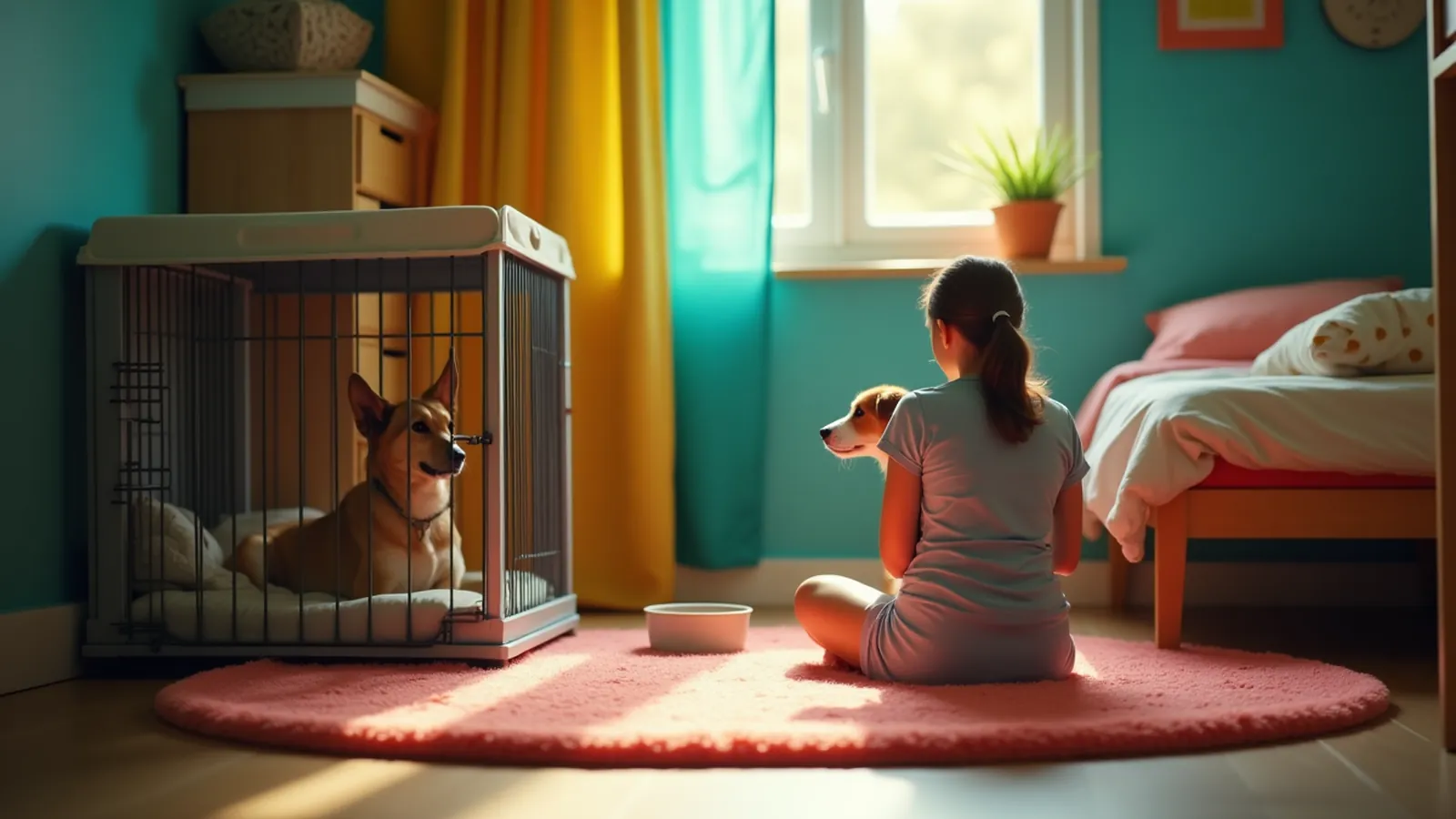
A four-year-old dog spends Day 1 behind the couch. The adopter leaves water and his usual kibble beside it and goes to another room; the bowl is half empty by morning. On Days 2 and 3 the adopter keeps meal and walk times the same, then sits on the floor reading aloud and rolling treats toward the couch. On Day 5 he eats a treat near the adopter's knee. On Day 7 he sniffs a hand and walks away, and nobody follows him. He is learning that people here don't grab.
Troubleshooting the first weeks
- If he only comes out at night
- Leave food and water within reach and keep up the floor-sitting sessions.
- If he flinches when you reach
- Stop reaching and keep your hands at your side. If he comes over and leans in, stroke his chest or shoulders for a few seconds, then stop and wait to see if he wants more (Dogs Trust).
- If he refuses even high-value treats
- Something is too much. Step back, as the SF SPCA says, and try again from further away.
- If he has accidents indoors
- Dogs Trust notes that an adult rescue may never have been house trained. See how to house train an older dog.
- If he cries at night
- Put his bed where he can relax, away from noisy windows, and offer a suitable chew (Dogs Trust). For a dog who is anxious about being apart from you, Dogs Trust suggests sleeping nearby at first, then gradually moving further away, and asking the rehoming center for advice.
- If barking or chewing appears in week three
- The SF SPCA says this can be normal as a dog adjusts. Add enrichment and short reward-based training; if it escalates, see your vet.
If he can't settle when you leave, that needs its own plan: see dog separation anxiety training. The SF SPCA says not every dog needs a crate; if you use one, the gradual steps in our crate training guide suit adult dogs too.
When to get professional help
Stop and call for help if
- He hasn't eaten for more than 12 hours, or refuses food and seems unwell (VCA).
- You see decreased appetite, lethargy, social withdrawal, vomiting or escalating behavior (SF SPCA).
- He growls, snaps or bites when approached, touched or disturbed, even in his den.
- He panics when left alone: frantic escape attempts, self-injury or constant howling.
- His fear is getting worse instead of slowly better after the first weeks.
Who to call. Start with your veterinarian: pain, illness and medication side effects can all show up as behavior changes. For behavior problems, look for a board-certified veterinary behaviorist (ACVB directory), a certified applied animal behaviorist, or a certified behavior consultant, for example through the IAABC or the CCPDT directories. Ask any trainer which methods they use; reward-based is what the American Veterinary Society of Animal Behavior recommends.
AVSAB says serious fear needs a veterinarian's evaluation and a treatment plan, which in some cases includes medication only a vet can decide on. Your rescue is also worth a call.
Frequently asked questions
What is the 3-3-3 rule for rescue dogs?
A rule of thumb used by shelters: about three days for a new dog to decompress, three weeks to learn your routine and three months to feel at home. The SF SPCA calls it a guideline and says not all dogs follow its timeline exactly. Use it to set expectations, not as a deadline.
Is it normal for a rescue dog not to eat the first day?
Eating little is common: the SF SPCA lists not eating much among possible normal responses to fear and stress. Leave his usual food near his den and give him privacy. But don't wait it out: VCA lists a pet who hasn't eaten for more than 12 hours as a reason to see a vet.
How long does rescue dog decompression take?
There is no fixed time. The rule suggests about three days, but Best Friends says hiding in very fearful dogs can last days or weeks. Watch your dog, not the calendar: eating, exploring and approaching you are better signs than the date.
Should I walk my rescue dog in the first three days?
Yes, if he is willing, but keep walks short and in the same place, as Dogs Trust suggests for the first few days, so he can get his bearings. Save new places for later: the SF SPCA lists park visits and car rides among the new experiences for the three-month stage. Keep him on a well-fitting harness and lead; a frightened new dog may try to bolt.
Sources
- The 3-3-3 Guideline, San Francisco SPCA (accessed October 27, 2026).
- How to help a rescue dog get settled into your home, Dogs Trust (accessed October 27, 2026).
- What to Expect When Rescuing a Puppy Mill Dog, Best Friends Animal Society (accessed October 27, 2026).
- Urgent Care for Loss of Appetite, VCA Animal Hospitals (accessed October 27, 2026).
- Shelter dog behavior after adoption: Using the C-BARQ to track dog behavior changes through the first six months after adoption, Bohland et al., PLOS ONE, 2023 (accessed October 27, 2026).
- Position Statement on Humane Dog Training, American Veterinary Society of Animal Behavior, 2021 (accessed October 27, 2026).
Just adopted? Start here
Settling an adopted dog in the order that matters: the first days, house training, alone time and building trust.