
New Puppy
How much sleep does a puppy need? Build a nap plan
No single hours figure fits every puppy, but the shape of the day is yours to set. Here is a nap rotation, a fixed wind-down hour and a boring 3 a.m. script.
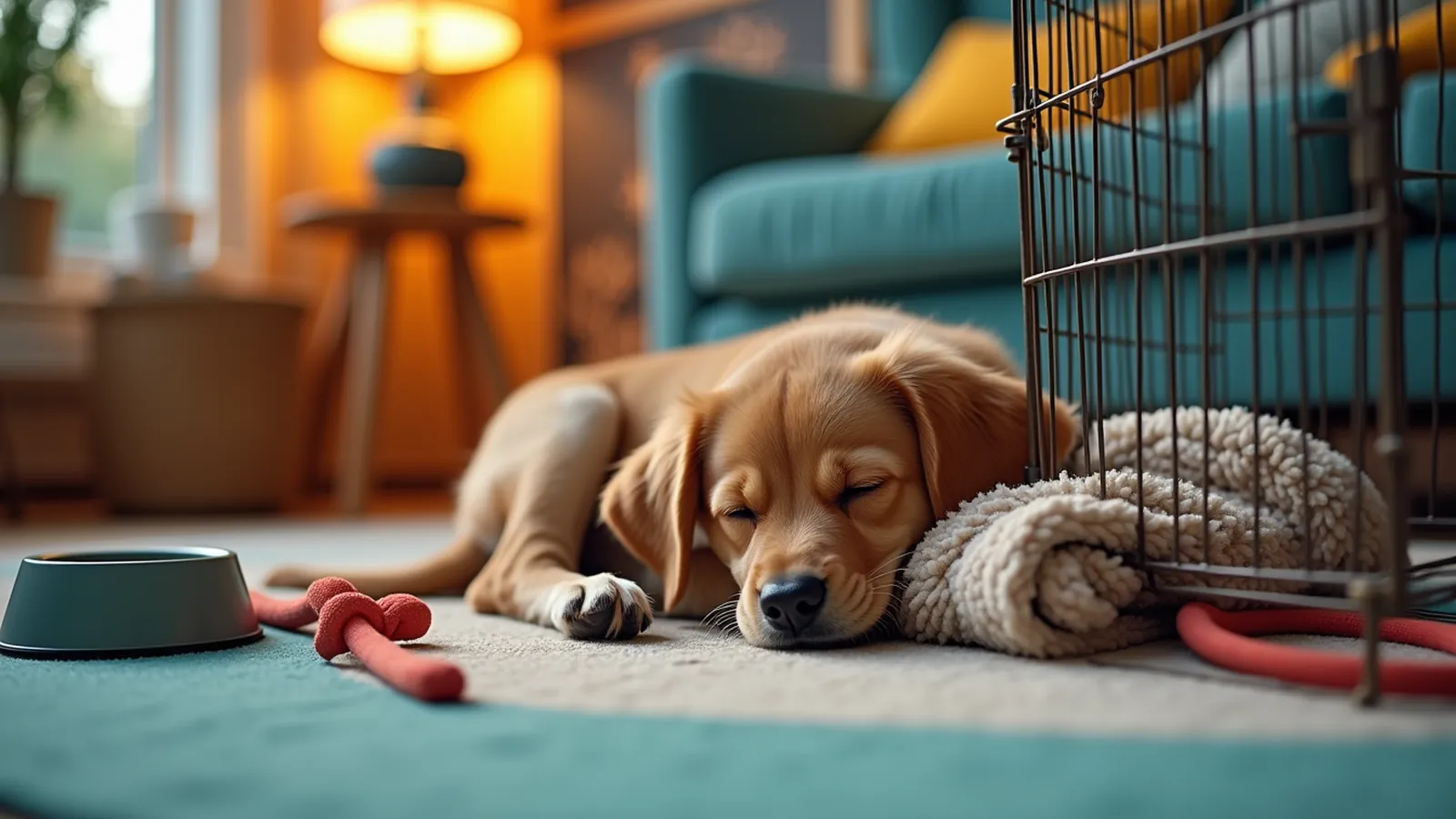
On this page (11 sections)
- How much should a puppy sleep? The honest answer
- Your puppy nap schedule is a rotation, not a stopwatch
- Build a fixed wind-down hour
- The 3 a.m. plan: toilet, boring, back to bed
- Your puppy sleeping schedule: change the rotation, not the dog
- Crate naps, and a rescue with a history you cannot see
- If you have already tried YouTube and a local puppy class
- When to get professional help
- Frequently asked questions
- Keep going
- Sources
It is 3 a.m., the crate is barking, and you are already doing the arithmetic on how you will get through a workday on this much sleep. By mid-afternoon the mistakes at work add up, and the plan you meant to follow dissolves into another night of guessing.
How much sleep a puppy needs has no single number you can look up and hit. What you can set is the shape of the day: a nap rotation with short awake blocks, a fixed wind-down hour, and a boring script for 3 a.m. so you are not inventing a plan while half asleep. If you also have an older dog or a rescue whose history you cannot see, give each dog its own rest place — this plan still gives you one sequence to run.
One honest limit up front: this page does not promise an uninterrupted night. The numbers that belong to your puppy, including how many nighttime toilet trips to expect, come from your veterinarian rather than from a chart.
Key takeaways
- No single hours figure fits every puppy. Age, size, growth, health and the day's activity all change it, so ask your veterinarian and treat any published range as a range.
- The plan is a rotation, not a stopwatch: wake, toilet, food or chew, one short awake block, wind-down, nap, repeat.
- Keep every rest session below the point where your puppy shows anxiety signs. Best Friends Animal Society lists pacing, pawing at the crate door, digging into the corners, crying, whimpering and barking as those signs.
- A crate is one nap tool, not a requirement. Best Friends notes that not all rescued dogs can or should be crate-trained.
- 3 a.m. has three likely jobs: a toilet trip, a crate-comfort gap, or distress. The response is different for each.
- Reward-based only here: no shock, prong or choke collars, and no dominance-style corrections. Panic, guarding or a sudden change in behavior means your veterinarian first, then a qualified behavior professional.
Do this today
- Ask your veterinarian two questions: how much sleep is typical for a puppy this age, and how often this puppy needs out at night.
- Set up one dark, quiet nap place your puppy can reach without passing the other dog.
- Write your 3 a.m. script on your phone now, while you are awake: toilet, boring, back to bed.
How much should a puppy sleep? The honest answer
The right number of hours depends on your puppy's age, size, how fast they are growing, their health, and how busy the day was. That is a question a veterinarian answers in a minute with your puppy in front of them. This site cannot answer it with a chart, and a page that hands you one exact figure for every puppy is guessing.
So ask, and write the answer down: "How much sleep should a puppy this age get, and how many nighttime toilet trips should I expect?" Treat the reply as a range, because every dog is different, and expect it to shift as your puppy grows. If your puppy cannot settle at all, seems uncomfortable, or cries in a way that worries you, that is a veterinary question before it is a schedule question.
What this page can add is the part a ten-minute appointment has no time to draw out: the order of the day. The skill to practice is spotting the moment your puppy has had enough, before the evening falls apart. Best Friends Animal Society supplies a clear rule for that moment — watch for the first anxiety signs, and keep the session below the point where they start.
Your puppy nap schedule is a rotation, not a stopwatch
Think in blocks. You are not hitting exact minutes and you are not keeping a puppy awake so they sleep better later. You are protecting rest before your puppy runs past the point where rest is easy.
Wake and toilet first
Straight to the usual spot before food, play or training, and reward the outdoor toilet the moment it happens. The first awake minutes are the ones most likely to become an accident.
Food or a chew in a quiet place
Feed in the crate if your puppy is comfortable there, which Best Friends recommends as a way to build a positive association, or in a pen or separate room if the other dog is hovering.
One short awake block
Pick one thing: a few minutes of training, gentle play, or a sniffy walk if your veterinarian says outings are safe. AVSAB's puppy socialization position statement advises early, safe socialization with veterinary guidance, so your vet decides when and where, not a video.
A wind-down signal, then a real nap
Lights down, toys away, one more toilet trip, then the nap place with the same short phrase every time. A nap behind a closed door is a different event from a doze under the coffee table while the household crosses the kitchen.
Repeat, and shorten before you lengthen
A puppy who comes out of a short nap already escalating needs more rest, not a longer walk. If they come out ready to play, the last awake block was probably too exciting.
| Block | What happens | What to watch |
|---|---|---|
| Wake | Toilet first, then food or chew. | Accidents, rushing, a puppy who cannot focus. |
| Awake block | One short training, play or sniff session, then stop. | Losing interest in treats, escalating fast. |
| Wind-down | Lights lower, toys away, last toilet, nap place. | Pacing, pawing, a second wind. |
| Nap | Dark, quiet crate, pen or room. | The first anxiety signs listed above. |
| Next block | Toilet, then the same sequence again. | Whether evenings are calmer or louder. |
Tip
Short awake blocks protect rest; they are not a punishment. If your puppy is spinning, biting the leash and unable to listen, the useful next move is a boring toilet trip and a dark room, not a bigger game.
Build a fixed wind-down hour
The hour before bed should be the most predictable part of the day. Pick an hour that works in your house and hold it steady long enough to see whether it helps. The point is not magic; it is a sequence your puppy can learn on a night when you are too tired to improvise.
- Lower the energy. No wrestling, no chase, no new visitors, no big training session. Calm is the goal, not a sleepy puppy on demand.
- Last toilet trip. Usual spot, wait quietly, reward, come back in. Do not turn it into a walk, because a walk at bedtime is a party.
- Quiet chew and settle. A chew in the crate, pen or separate room gives your puppy a safe way to slow down and doubles as the positive crate experience Best Friends describes. If your puppy guards chews, use separate spaces and get professional help.
- Same place, same phrase, boring nights. Low light, low voice, no play. If 3 a.m. becomes the most interesting part of the day, it will keep being interesting.
The full bedtime picture, including where a puppy should sleep in the first weeks, is in puppy sleep routine: where should a puppy sleep. Keep the night version short enough that a tired person can run it without reading anything.
The 3 a.m. plan: toilet, boring, back to bed
When the barking starts you need a script, not a debate. Same steps, same order, every time.
Pause and listen for ten seconds
A puppy who shuffles and resettles may go back to sleep. A puppy who is panting, drooling, clawing at the door or trying to get out is not testing you. That is distress, and it changes what you do next.
If it is likely a toilet trip, go boring
Low light, leash on, straight to the usual spot. No chatting, no play, no food. Reward the outdoor toilet calmly and immediately.
Straight back to the sleep place
Lights off, voice low, door closed. If crying starts the second the door shuts, that is a crate-comfort gap rather than a toilet need: feed in the crate, close the door for seconds, open it before any noise starts.
Stop the night if it is panic
If your puppy is frantic, hurting themselves, or cannot recover once you leave, let them out and end the session for the night. That needs an assessment, not a longer wait.
Do not test your puppy's bladder. Ask your veterinarian how often your puppy needs out at their age and follow that answer, because it depends on the individual puppy and changes as they grow. Keep a phone note for one week: what time, what the crying sounded like, what you did, what happened next. A week of notes gives you a pattern instead of a blur, and a pattern is what you take to your veterinarian if you need help. More on telling a settling shuffle from real distress is in puppy crying in the crate at night.
Your puppy sleeping schedule: change the rotation, not the dog
Use behavior as your feedback and change one thing at a time so you can tell what helped.
| What you see | First change to try |
|---|---|
| Escalating in the evening: biting, zoomies, cannot settle | Shorten the last awake block and put a quiet nap before the difficult hour. |
| Wakes from a nap and is instantly wild | Make the nap place darker and quieter, or switch to a pen or safe room. |
| Wakes at 3 a.m. ready to play | Make the night trip boring and move all play and training into daylight. |
| Sleeps all day and is active all night | Keep daytime naps in normal household light and ask your veterinarian about the pattern. |
- If your puppy fights every nap
- Go earlier next time and build crate comfort in seconds rather than whole naps. Best Friends' rule: stay below the first anxiety signs, then build gradually.
- If your puppy will not nap in the crate
- Use a pen or a safe room for now, keep feeding in the crate, and never force a frightened dog.
- If you are too tired to run the whole plan
- Do the smallest version: toilet, food, nap place, boring night. Then ask for help, because a sleep-deprived household is a safety issue as well as a training one.
A puppy has a busy day: a visitor in the morning, a training session at lunch, a car trip. By seven in the evening the puppy is biting the leash, racing in circles and cannot settle even with the toys put away. Nobody adds a longer walk. The lights go down, there is a boring toilet trip, a chew goes into the crate, and a person sits nearby saying nothing interesting. The puppy falls asleep. The next day the awake blocks are shorter and a quiet midday nap is protected behind a gate, and the following evening is easier to steer. This illustrates the pattern; it is not a promise for every puppy.
The daytime toilet trips and the nap rotation belong together, so keep one plan rather than two competing ones. If house training is the current mess, the trip-timing side is in puppy nighttime potty training.
Crate naps, and a rescue with a history you cannot see
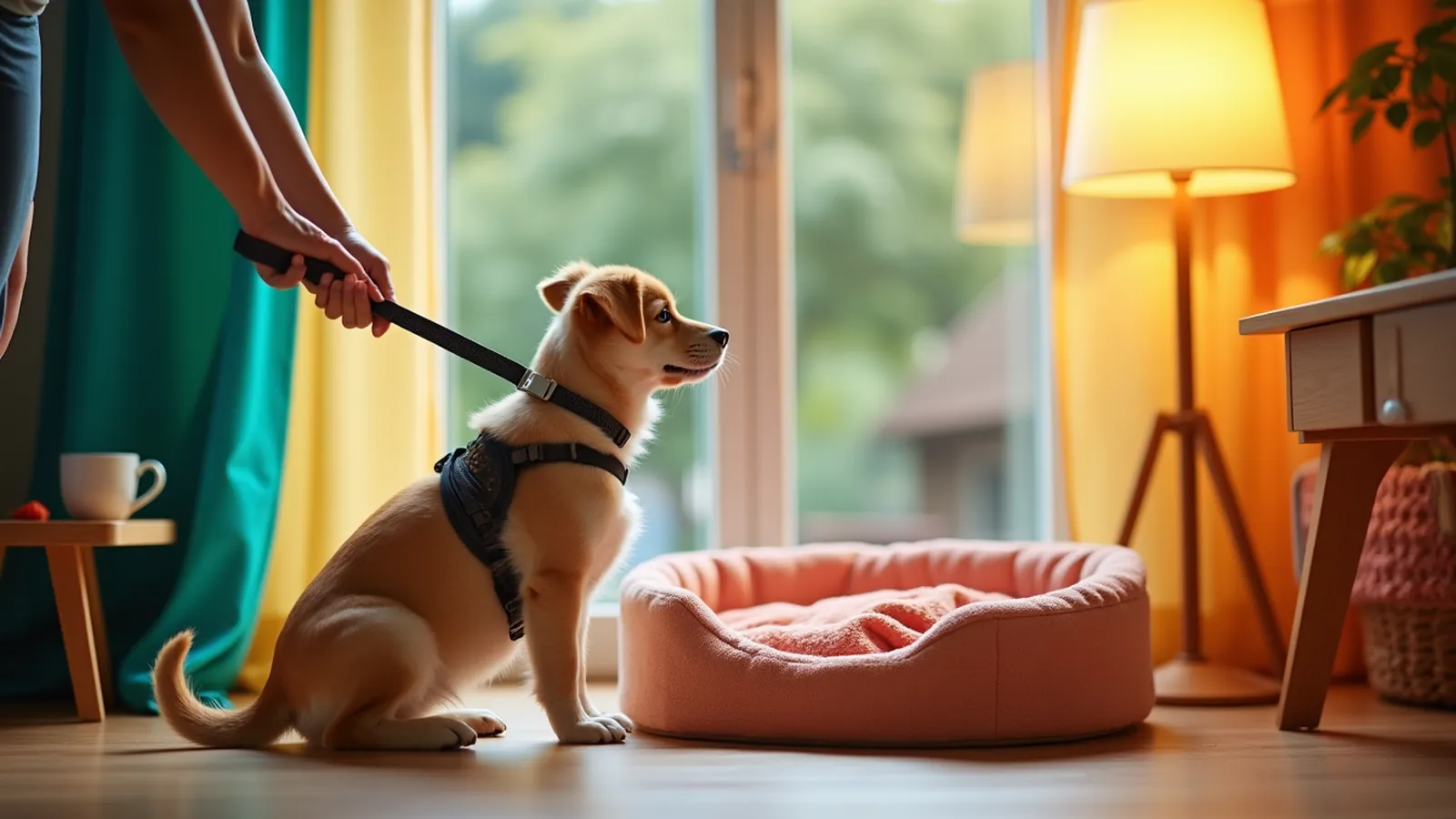
A crate can be a useful nap tool for a puppy. It is not the only tool and it is not a test of toughness. Best Friends Animal Society notes that not all puppy mill dogs can, or should, be crate-trained, because many are terrified of crates after spending their lives in one. That caution applies to any rescue with an unknown history, so watch what your dog tells you rather than what the plan says. The crate-comfort steps above are the ones to use; do not push a frightened dog into a crate to see whether they get used to it, because Best Friends is direct that forcing a very fearful dog can strengthen the fear instead of softening it.
If you have two dogs at different stages, give each one its own rest place: a gate, a closed door, or two resting zones so one dog is out while the other sleeps. That is not favoritism; it is how you stop the puppy rehearsing biting and the rescue rehearsing guarding. If your rescue growls, snaps or guards a bed, a toy or a person, separate the dogs calmly, do not correct the growl, and get professional help. The step-by-step crate version is in how to crate train a puppy, and the 3-3-3 rule for rescue dogs is a useful frame for how slowly trust builds.
If you have already tried YouTube and a local puppy class
Your skepticism is reasonable. A video shows you a technique, and a group class gives you supervised practice in one room. Neither stands in your hallway at 3 a.m. and tells you whether the barking is a toilet need, a crate-comfort gap or distress. So use a filter before you spend anything: does it use reward-based methods throughout, explain what to do when a step fails, and say when to see a veterinarian or a qualified behavior professional? If you are weighing The Online Dog Trainer (opens in a new tab), the Doggy Dan review describes only what the vendor's own pages state, dated, and names the free alternatives that may be enough for you. We have no affiliate relationship with The Online Dog Trainer today, and we earn nothing if you buy. If that changes, this sentence and the links will say so.
When to get professional help
Stop and call for help if
- Your puppy cannot settle, cries constantly, or seems uncomfortable in a way that worries you.
- A bite breaks skin or leaves a bruise.
- Your dog guards food, toys, a bed or a person with a growl, snap or bite.
- Your dog shows severe or panicked fear and does not recover.
- Your dog injures themselves trying to get out when left alone, or panics every time you leave.
- Your dog's behavior changes suddenly, especially if they seem painful or unlike themselves.
Who to call. Start with your veterinarian: pain, illness and medication side effects can all show up as behavior changes. For behavior problems, look for a board-certified veterinary behaviorist (ACVB directory), a certified applied animal behaviorist, or a certified behavior consultant, for example through the IAABC or the CCPDT directories. Ask any trainer which methods they use; reward-based is what the American Veterinary Society of Animal Behavior recommends.
Good Dog Basics is an education site, not a veterinary or behavior practice. When a problem is sudden, painful or severe, the right move is a referral rather than another video.
A review of separation-related problems on PubMed Central notes estimates that between 22.3 and 55 percent of the general dog population show these signs and that there is no single diagnostic test, and it describes fear, frustration and panic as part of the picture. None of that means every 3 a.m. bark is a separation problem. It means a puppy who panics or cannot recover needs an individual assessment, which is why the list above exists.
Frequently asked questions
How much sleep does a puppy need each day, and what is a good puppy nap schedule?
There is no single number that fits every puppy, and you will see a wide spread of figures online. Age, size, growth, health and the day's activity all change it, so ask your veterinarian and treat the answer as a range. Then run a rotation rather than a stopwatch: wake, toilet, food or chew, one short training or play block, wind-down, nap, repeat, keeping every rest session below the first anxiety signs such as pacing, pawing, digging, crying or barking.
Should I wake my puppy for a nighttime toilet trip, and why is my puppy worse in the evening?
Ask your veterinarian how often your puppy needs out at their age, and do not test how long they can hold it. If you set an alarm, keep the trip boring: low light, no talk, no play, straight back to sleep. A puppy who is worse in the evening is often an overtired puppy, so shorten the last awake block and put a quiet nap before the difficult hour. If the behavior is sudden, painful-looking or directed at your other dog, get professional help.
Sources
- What to Expect When Rescuing a Puppy Mill Dog, Best Friends Animal Society (accessed November 1, 2026).
- Separation related problems in dogs, PubMed Central (accessed November 1, 2026).
- Position Statement on Humane Dog Training, American Veterinary Society of Animal Behavior (accessed November 1, 2026).
- Position Statement on Puppy Socialization, American Veterinary Society of Animal Behavior (accessed November 1, 2026).
New puppy? Start here
The first weeks in the order that matters: sleep, toilet trips, the crate, biting and safe socialization.