
New Puppy
Puppy pees after playing? Time the potty break
You take your puppy out after every meal and nap, then a short tug game ends with a puddle on the rug. Here is the before-and-after-play potty rule, plus how to calm the game before the bladder lets go.
On this page (11 sections)
- Puppy pees after playing: the short answer
- The before-and-after-play potty rule
- A two-minute tug puddle, worked through
- How to calm play before the bladder lets go
- Puppy excited peeing: the short version
- If this happens, try this
- If YouTube and a puppy class did not solve it
- When to get professional help
- Frequently asked questions
- Keep going
- Sources
Your puppy has been out after breakfast, out after the nap, and out again ten minutes ago. Then you kneel down for tug, the game gets fast, and two minutes in there is a puddle on the rug. If your puppy pees after playing, you have not lost the house-training war, and your puppy is not being defiant. You have found the stretch of the day your potty routine was not built around yet.
You already have the big routines: meals, naps, trips outside. What is missing is the small routine around play. A before-and-after-play potty rule gives the bladder two chances to empty around the game, keeps the wildest minutes on a floor that can handle a mistake, and builds a calm finish. Why a fast game ends in a puddle - and when to head outside is the whole question this page answers.
Key takeaways
- Take your puppy out before play and again as soon as play stops. Two trips around the game, not one.
- A puddle two minutes into tug is timing information, not defiance. The minutes just before the puddle are where the answer sits.
- Owners call this puppy excited peeing. It may be excitement, it may be a gap in house training, and the two can overlap. The first move is the same either way.
- Keep tug short, stop before the wildest moment, and put a toy between your hands and your puppy's teeth. Dogs Trust advises against rough play, wrestling games and encouraging puppies to mouth hands.
- Puppies need a lot of sleep. Dogs Trust puts it at around 18 to 20 hours a day, and notes that under-slept puppies often show zoomies, wanting to play and mouthing.
- If your puppy only urinates when alone or confined and seems distressed, that is not a play problem. Call your veterinarian and then a qualified behavior professional.
Do this today
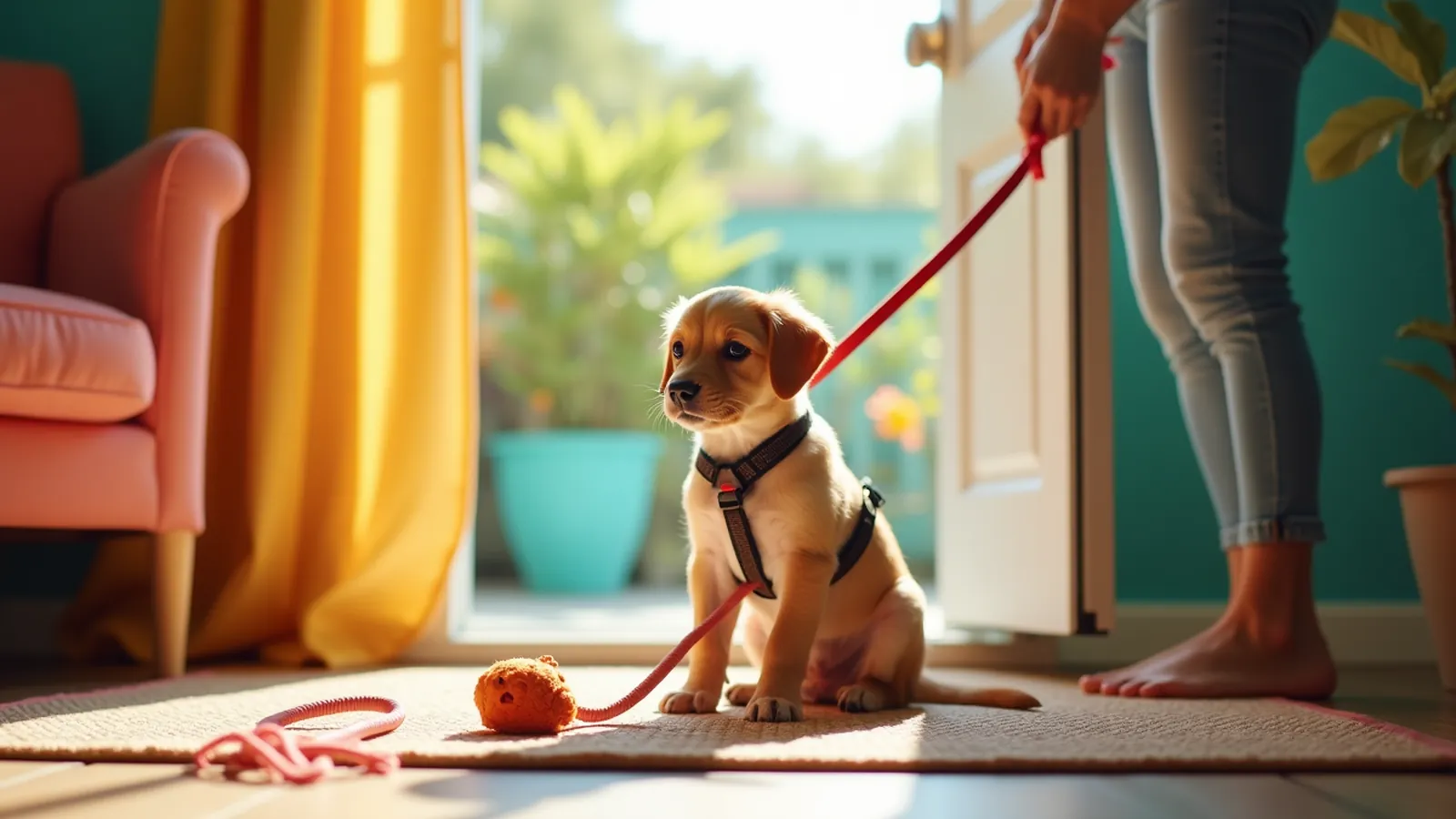
- Put a leash by the door and use the same boring potty spot before the next play session.
- Move tug to the kitchen, a gated area or outside, not the rug.
- When play stops, go straight out for a second potty before your puppy naps or plays again.
- Write down the last three accidents and what was happening a few minutes before each one.
Puppy pees after playing: the short answer
A puppy who has just been outside can still puddle during a fast game. The trip outside emptied the bladder at that moment. The game then adds movement, excitement and sometimes a drink of water, and the next puddle can arrive sooner than the clock suggests it should.
Every puppy is different, so treat any timing on this page as a starting point rather than a rule. The useful question is not "why did he do this to me?" but "what was happening a few minutes before the puddle?" For indoor play accidents, the pattern to look for is a fast game, a recent drink and no easy route outside.
Owners describe this as puppy excited peeing, puppy peeing when excited, or puppy peeing from excitement. The label may fit. It may also be an ordinary gap in house training, and in a young puppy the two can overlap. Either way the fix has the same shape: empty the bladder on both sides of the fun, lower the peak of the play, and make the floor forgiving while you practice.
The before-and-after-play potty rule
Use this loop every time you play indoors. It takes less planning than cleaning a rug, and it costs nothing.
Potty first, before the toy comes out
Leash on, same boring spot, stand still. Reward the pee outside. If nothing happens, give it a short wait and try once more. If your puppy still does not go, choose an easy-clean play area instead of the living room rug. The point is to give the bladder a chance to empty, not to win a standoff at 7 p.m.
Choose the play area on purpose
Play outside, in the kitchen, or in a gated area with a floor that can handle a mistake. A towel or an easy-clean mat under the game helps. If you also have a rescue dog, use a gate so the puppy is not bouncing into the rescue's space. The 3-3-3 rule for rescue dogs is a useful reminder that the resident dog may need a quiet exit.
Start with a toy, not hands
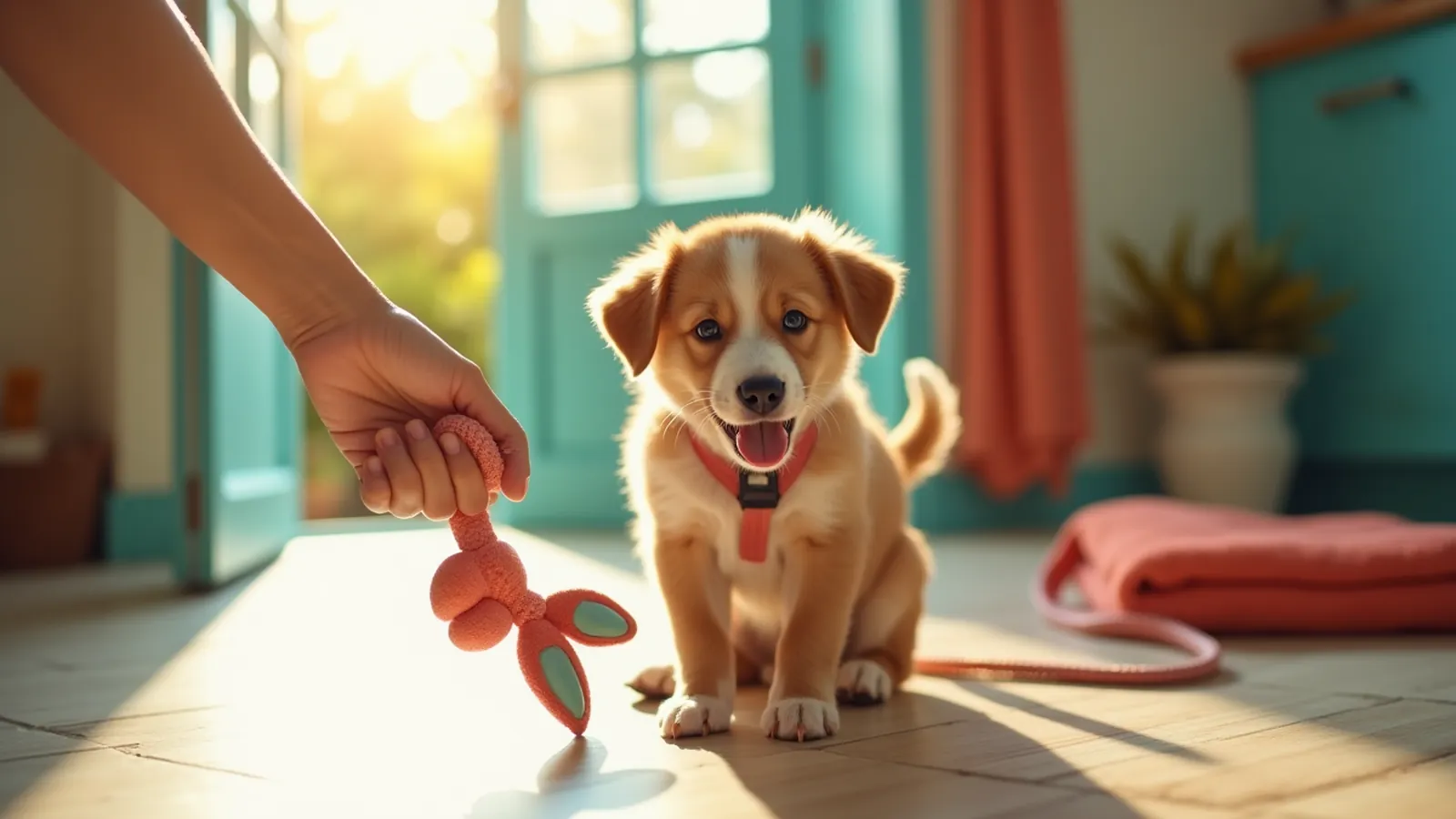
Dogs Trust advises against rough play, wrestling games and encouraging puppies to mouth hands, because it teaches them that biting people is part of play. A tug toy gives your puppy a legal outlet and gives you a clear way to pause the game. When teeth touch skin, the toy goes away and the game stops for a moment.
Stop before the peak
Play in short bursts. Let go of the toy, stand still, say nothing, and wait for a pause. If your puppy can stop for a second, reward that calm moment. If your puppy is still launching at the toy or at you, the game is already too high. End it and head out.
Potty immediately after play
As soon as you stop, leash on and out to the usual spot. Reward any pee outside. If nothing happens, come in for a short settle and try again before the next nap or play session. The after-play trip is the half of the rule most owners skip.
Close with rest, not another game
Dogs Trust notes that puppies need a lot of sleep, around 18 to 20 hours a day, and that under-slept puppies often show zoomies, wanting to play and mouthing. A nap after play is part of the potty plan. A crate or a gated space gives you a minute to clean up and reset.
Dogs Trust also suggests lots of short, ten-minute activities across a puppy's day, including time to eat, drink and go potty. Treat ten minutes as a guide rather than a target. If your puppy is already spinning at minute three, that game was too long for that moment.
One thing this plan does not include is a correction. This site uses reward-based methods only: no shock, prong or choke collars, and no dominance-style corrections. AVSAB's position statement on humane dog training recommends reward-based training, and that matters here for a practical reason. A puppy who is wary of the potty area, or of you, is less likely to relax enough to go there.
A two-minute tug puddle, worked through
A puppy is taken out, pees, and comes back inside. The owner starts tug in the living room. Two minutes in, the puppy squats mid-game. Nobody scolds. The game stops, the puppy goes straight outside to the usual spot, anything that happens out there gets rewarded, and the rug gets cleaned while the puppy rests behind a gate.
The next session looks different. Potty first. Tug in the kitchen, behind a gate. The owner stops at the first pause, leashes the puppy and goes out. If the puppy is still wild, the game ends and the puppy gets a chew in the crate. That is not a punishment. It is a smaller step, and it gives the bladder a better chance of being empty when the next game starts.
Notice what is not in that example: a longer wait, a correction, or a puppy who has to hold it to prove a point. The change is environmental and timed. You are not teaching your puppy to feel shame about a puddle. You are teaching yourself to see the play-to-potty pattern sooner, which is the part that actually moves this forward.
How to calm play before the bladder lets go
Calm play is not boring play. It is play with a pause built in. These moves lower the peak without turning the fun off.
- Shorten the game before it gets frantic. If your puppy is already spinning, the game is too long for that moment. End it, go out, and start smaller next time.
- Build a pause button. Let go of the toy and stand still. Wait for a blink, a shake-off, a sit or a glance at you. Reward the pause, then choose: another short round, or a potty trip. A puppy who can pause can also be leashed without a wrestling match.
- Keep teeth on the toy. If your puppy redirects to hands, end the game, stand up and step away for a moment. Dogs Trust's mouthing sequence is stay still, cross your arms, move away, then reward calm. The same sequence works when play tips into biting.
- Think about the last drink and the last nap. If your puppy just had a long drink of water, take a short trip outside before tug. If your puppy just woke up, go out before play. Those are the moments worth building a trip around.
- End with a settle, not a sprint. A chew in the crate, a scatter feed on a towel or a quiet lie-down gives the puppy something to do while the excitement drops. If your puppy cannot settle at all, the play was probably too long or too wild for that moment.
For the full house-training sequence around meals, naps and nights, use the puppy potty training schedule. This page is the play-specific layer on top of it: same routine, one extra pair of trips.
Puppy excited peeing: the short version
Puppy excited peeing usually means the dribble or puddle that turns up when a puppy is wound up about something good: you come home, a guest arrives, the other dog starts moving, or tug gets wild. Whether excitement is the whole explanation or only part of it, the move is the same: empty the bladder before the peak, lower the peak, and give the floor a chance. The full calm-greeting plan lives in dog peeing when excited; these three steps are the ones that apply to play.
How to stop puppy peeing when excited
Potty before the exciting event
Before guests, before a play session, before you open the crate: a boring trip outside, and reward the pee. If your puppy does not go, keep the greeting short and keep it on an easy-clean floor.
Lower the peak
Meet guests outside or in the kitchen, not on the rug. Keep your voice low and let the puppy come to the person rather than being loomed over, then keep the fuss brief. For play, shorten the round and stop at the first pause instead of waiting for the wildest moment.
Interrupt the build-up, not the puddle
If your puppy starts spinning, panting or jumping, that is the moment to pause: take a breath, ask for a simple sit or a hand touch, then go out. Do not wait for the puddle and then correct it. Clean the spot quietly. No pushing the nose in it, no shouting, no spray bottles, because those methods can teach a puppy to hide the next puddle.
If your puppy dribbles when excited but also leaks while resting, strains to pee, or starts having accidents after being reliable, call your veterinarian before you change the training plan. The steps above are about timing and arousal, not about a medical problem.
If this happens, try this
- If your puppy pees during tug
- Potty before the toy comes out, move the game to an easy-clean floor, and stop at the first pause. If the puddle still comes, the play is too long or too wild for that moment. Shorten it and add a settle.
- If your puppy pees soon after coming in from a potty trip
- Stay outside a little longer, or add a second trip after play. Reward the outdoor pee. Do not assume the first trip failed; your puppy may have been too wound up to empty fully, or may simply have needed longer.
- If the puddles cluster around greetings
- Potty before the greeting, meet outside or on hard floor, keep the greeting low-key, and let the puppy come to the person. The full greeting plan is in dog peeing when excited.
- If your puppy pees after playing with the other dog
- Two dogs bouncing off each other is a lot more arousal than one puppy and a toy. Separate them, potty each dog alone, and use a gate for the next session. Shorten the game before either dog gets frantic, so neither dog is rehearsing a wilder version of the same moment.
- If your rescue growls, snaps or guards a toy or a person
- Separate the dogs calmly and call your veterinarian first, then a qualified behavior professional (a board-certified veterinary behaviorist, certified applied animal behaviorist, or certified behavior consultant). That is a signal, not dominance, and it is not something to correct. Meanwhile keep the puppy's wildest minutes away from the rescue's resting space. Best Friends describes rescued puppy mill dogs as arriving with their true personalities buried under a lot of emotion, sometimes very deeply, which is a reason for calm, separate routines rather than pushing the dogs together.
- If you have already scolded for an excited puddle
- Stop. Start again with potty first and a calm greeting. A scolded puppy may still pee, and may also become worried about you. You cannot punish a puppy into better timing.
- If the accidents are frequent, painful or sudden
- Call your veterinarian before changing the training plan. A previously reliable dog who starts urinating indoors, or a puppy who strains or seems uncomfortable, needs a medical check first.
If YouTube and a puppy class did not solve it
Potty training is one of the few areas where a simple routine beats a big program. A video can show you a potty trip. A group class gives you supervised practice in one room. Neither one stands in your kitchen and watches the few minutes before a puddle. That is not a failure of the class. It is a gap in observation, and a log closes it.
That does not mean every course is useless. It means you need a filter before you spend money. Check four things: whether it uses reward-based methods throughout; whether it explains what to do when a step fails; whether it is honest about fear, guarding and alone-time distress instead of promising to end them; and whether it tells you when to see a veterinarian or a qualified behavior professional. A program that promises a trained dog in a set number of days is not a plan. Close the tab.
If you are weighing The Online Dog Trainer (opens in a new tab) for the bigger manners picture, our Doggy Dan review describes only what the vendor's own pages state, dated, and names the free alternatives that may be enough. As listed on its site on October 27, 2026, Good Dog Basics has no affiliate relationship with The Online Dog Trainer. The same questions, applied to any course, are in online puppy training courses. For this potty problem, you do not need a paid program. You need a leash by the door, a boring potty spot and a note on your phone.
Gear deserves the same honesty. A crate or a gate is a management tool, not a fix. If a product helps you prevent a puddle while you build the routine, that is useful. If it is replacing the routine, it is not.
When to get professional help
Stop and call for help if
- Your puppy panics when left alone, or only urinates when alone or confined and seems distressed.
- A previously reliable dog starts having accidents suddenly, or your puppy strains, seems uncomfortable, or drinks and urinates far more than usual.
- There is growling, snapping or guarding between the puppy and your rescue around toys, food or people.
- You feel stuck about the rescue's fear, or the puppy's accidents come with fear or aggression.
Who to call. Start with your veterinarian: pain, illness and medication side effects can all show up as behavior changes. For behavior problems, look for a board-certified veterinary behaviorist (ACVB directory), a certified applied animal behaviorist, or a certified behavior consultant, for example through the IAABC or the CCPDT directories. Ask any trainer which methods they use; reward-based is what the American Veterinary Society of Animal Behavior recommends.
Good Dog Basics is an education site, not a veterinary or behavior practice. A puddle after play is a routine problem you can work on at home. Panic when alone is different. A review of separation-related problems lists urination and defecation when alone or confined among the signs, alongside other behaviors, which is why that pattern calls for an individual assessment rather than another potty chart.
Frequently asked questions
Why does my puppy pee after playing?
Your puppy may have emptied their bladder on the earlier trip, then filled it again during a fast, exciting game, sometimes with a drink in between. Treat the puddle as timing information rather than defiance. Leash on before the toy comes out, and go straight out again when the game stops.
Is my puppy excited peeing or just not house trained?
It may be either, and the two can overlap. If the puddles cluster around play, greetings or other exciting moments, and your puppy also goes potty outside on a routine, excitement may be part of the picture. If accidents happen at all sorts of times, review the puppy potty training schedule. Either way: potty first, and lower the peak.
How do I stop puppy peeing when excited?
You cannot switch excitement off with a command. Empty the bladder before the exciting event, keep greetings and play short, pause before your puppy peaks, and head out as soon as the fun stops. Do not punish the puddle. If the pattern continues, keep a log and raise health concerns with your veterinarian.
How soon after play should I take my puppy out?
As soon as play stops: leash on and out to the usual spot. If nothing happens, come in for a short settle and try again before the next nap or play session. There is no single perfect number of minutes, so use your notes to see when the puddle tends to happen for your puppy.
Could a puppy peeing after play be a medical problem?
It can be, which is why sudden changes need a veterinarian. Call your vet if your puppy strains, seems uncomfortable, leaks while resting, drinks or urinates far more than usual, or starts having accidents after being reliable. The play plan above is about timing and arousal; it is not a medical assessment.
Sources
- Mouthing, nipping and biting, Dogs Trust (accessed October 30, 2026).
- What to Expect When Rescuing a Puppy Mill Dog, Best Friends Animal Society (accessed October 30, 2026).
- Separation related problems in dogs, PubMed Central (accessed October 30, 2026).
- Position Statement on Humane Dog Training, American Veterinary Society of Animal Behavior (accessed October 30, 2026).
New puppy? Start here
The first weeks in the order that matters: sleep, potty trips, the crate, biting and safe socialization.