
Rescue Dog
Rescue dog not eating? A low-pressure feeding plan for the first weeks
An untouched bowl in the first days is a worry, not a verdict. Here is a quiet feeding station, short timed meals, one change at a time, and a simple log that shows you when to wait and when to call your vet.
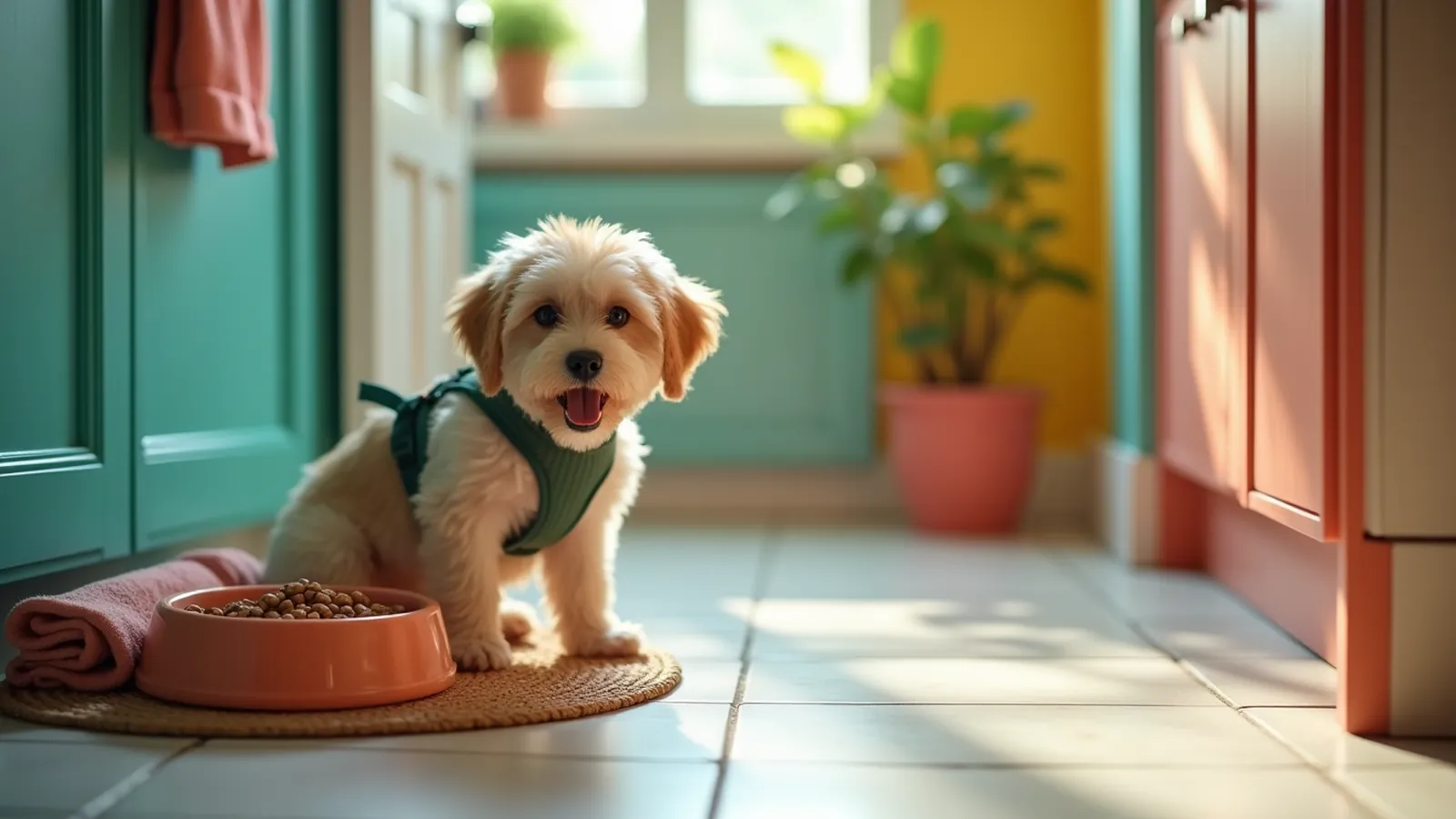
On this page (13 sections)
- Rescue dog not eating: start with what changed this week
- Step 1: Set up a quiet feeding station
- Step 2: Short timed meals, lifted without comment
- Step 3: Bowl and location changes to try, in order
- Step 4: Fade the hand-feeding without going cold turkey
- Step 5: A three-day intake log, and how to read it
- Two dogs, one kitchen
- If he only eats when you are in the room
- Troubleshooting the first weeks
- When to get professional help
- Frequently asked questions
- Keep going
- Sources
A rescue dog not eating in the first days is common enough to plan for, and it is not a verdict on you. The bowl goes down, your new dog looks at it and walks away, and every uneaten meal adds another layer of worry that he will never settle in.
What helps is being boring on purpose. One quiet feeding station, short meals on a steady rhythm, a single change at a time, and a simple record of what he actually eats. The plan below is written for a house that also has a puppy in it, because two dogs at different stages have to eat without colliding.
Key takeaways
- An untouched bowl in the first days is usually about pressure and change, not defiance.
- Give him one quiet station, out of sight of the puppy and away from foot traffic.
- Put the bowl down for a window you pick, such as 10 to 15 minutes, keep it the same every day, then lift it without comment.
- Change one thing at a time: location first, then bowl, then how the food is delivered. Change the food last, and only with your vet's input.
- Log what he eats so you are reading a trend instead of one bad meal.
- Refusing food along with any other symptom is a vet call, not a training problem.
Do this today
- Move his bowl to the quiet station tonight, even if dinner goes uneaten.
- Put the food down, walk away, and come back only at the end of your window.
- Feed the puppy in another room or behind a gate at the same time.
- Write four lines on your phone: meal, offered, eaten, anything different.
Rescue dog not eating: start with what changed this week
If your dog is not eating food he used to finish, the useful question is not why he won't eat in the abstract. It is what is different this week. For a dog who arrived days ago, almost everything is: new people, new smells, a different fridge, a different bowl spot, someone watching him chew, and possibly another dog in the room.
Behavior in a newly adopted dog keeps shifting after arrival. A 2023 study that followed dogs adopted from five shelters across six months found their behavior scores changing over that period, and its authors suggest that realistic expectations about what changes, and when, may mean fewer dogs are returned. The dog who ignores dinner in week one is a starting point, not a personality.
The ordinary things worth ruling out first:
- Being watched. Many dogs wait until the room is empty.
- The location. A bowl in the walkway to the back door sits in the busiest square foot of the house.
- The other dog. Even a friendly puppy takes the joy out of a meal if he is edging closer.
- The bowl. Deep, sliding, rattling or reflective bowls put some dogs off.
- Between-meal food. Training treats, chews and scraps add up.
- A hard week. A vaccination, visitors or a car journey can flatten appetite for a day.
- Hand-feeding only. If every bite has come from your fingers, he has never practiced eating from a bowl.
None of that rules out a medical reason, which is why the vet section below matters more than any feeding trick on this page.
Watch for
Vomiting, diarrhea, drooling, trouble swallowing, weight loss, or a dog who seems sore, quiet or withdrawn. A dog who ate normally last week and stopped this week is a vet question first.
Step 1: Set up a quiet feeding station
This one change does the most work, so make it first. The goal is a spot where he can eat with no audience, no competition, and no need to squeeze past anyone to leave.
Choose a low-traffic corner
A spare room, a quiet end of a hallway, or a corner away from the kitchen entrance. Out of sight of where the puppy eats is better than across the room from him. If you keep walking past the station to check on him, pick somewhere else.
Leave him an escape route
He should never be boxed into a corner with you between him and the door. A dog who has to walk past a person to leave the bowl will often skip the meal.
Feed both dogs at the same time, in separate rooms
Puppy in his crate or behind a gate with his own bowl; rescue in his room with the door closed. Simultaneous, separate meals stop the puppy hoovering the rescue's dinner and stop the rescue learning to gulp. If the puppy protests, the gradual steps in how to crate train a puppy handle that separately.
Put water in the room, not in the bowl
Fresh water available at all times, a little away from the food so nothing gets tipped in.
Be boring company
Bowl down, nothing said, then leave or sit at a distance with a book. No commentary, no circling with a spoon, nobody standing over him.
Step 2: Short timed meals, lifted without comment
Give him the window you chose, then lift the bowl and put it away. No sighing, no coaxing, no offering it again five minutes later, no following him around the room with it. Food appears, food goes, and the same thing happens at the same time tomorrow. That rhythm is what does the work.
This is not a hunger gamble, and it is not a trick to make him eat out of relief. It removes the all-day bowl, which hides how much he is actually eating, and it gives you real information to write down. Count training treats and chews as part of the day's food rather than extras on top.
Two things never to do: never take the bowl away while he is eating, and never put a hand in his food. A worried dog learns nothing from that except that people near the bowl are a threat.
Check with your vet first if
Your dog is a young puppy, elderly, underweight, on medication, or has a health condition. Timed feeding is a routine for a healthy dog; for anyone else the timing should come from your vet, not from a website.
| When | What you do | What you log |
|---|---|---|
| Morning, same time daily | Bowl down at the station, door closed, puppy fed elsewhere. Walk away. | Offered, eaten, anything different |
| End of your window | Lift the bowl without comment and put it away. | Roughly how much was left |
| Midday | A toilet trip and a rest, or a short session using part of the day's food. Nothing left down. | Treats or chews given outside meals |
| Evening, same time daily | Second meal, exactly like the morning one. Fresh water after. | Offered, eaten, vomiting, drooling |
Step 3: Bowl and location changes to try, in order
Work down this list one line at a time. Give each change several meals before you judge it, because a dog who is already unsettled needs a moment to notice that anything is different. Changing the bowl, the room and the food on the same day tells you nothing, and a sudden food switch can upset a stomach, so ask your vet before you change what he eats.
| # | Change | Why it can help |
|---|---|---|
| 1 | Same food, same bowl, new quiet location | Removes the audience and the traffic first |
| 2 | A shallower, wider bowl or a flat plate | Some dogs dislike pushing their muzzle into a deep bowl |
| 3 | A non-slip mat under the bowl | A bowl that skids or rattles on tile is startling |
| 4 | A different material, such as ceramic instead of metal | Reflections and metallic noise put some dogs off |
| 5 | Scatter the food on a clean towel or on the floor | Eating becomes sniffing and searching, with no bowl to approach at all |
| 6 | A food puzzle in the same spot | Same food, more to do, which suits a dog who leaves a bowl in two seconds |
| 7 | Toss a few pieces from your hand | A bridge for a very worried dog, kept as a bridge rather than the whole meal |
Step 4: Fade the hand-feeding without going cold turkey
Hand-feeding is not a failure. For a frightened dog it is often the first thing that works, and it builds the idea that good things come from you. The problem is only when it becomes permanent, because then he never learns that the bowl is safe when your hands are not in it. Move down this ladder one rung at a time, and only when he is eating calmly where he is.
Toss pieces on the floor near the bowl
He eats, you stand back. No eye contact, no talking.
Hold the bowl at arm's length while he eats
Then set it down while he is still eating from it.
Set the bowl down yourself, then take one step back
Stay for the whole meal if he needs it, but stay still and quiet.
Add the rest of the meal to the bowl
So the bowl, not your hand, is where the food comes from.
Step further away, then leave the room
Door open first, then closed. If he stops eating when you leave, go back a rung and stay there until he is calm again.
If he will only eat from your hand with you both in another room entirely, do that for now. A fed dog today is worth more than a perfect protocol.
Step 5: A three-day intake log, and how to read it
You do not need an app. Four columns in a note on your phone will do: which meal, what you offered, roughly how much was eaten, and anything different about that day. The point is to see whether the trend is up, flat or down, because memory is unreliable when you are tired and worried.
A dog arrives on a Saturday and eats almost nothing for two days. His owner stops standing over the bowl, moves it to a spare room, feeds the resident puppy behind a gate at the same time, and writes down each meal. By the third evening the bowl is coming back nearly empty. Nothing dramatic happened; the audience left and the routine arrived.
| Day | Meal | Offered | Eaten | What was different |
|---|---|---|---|---|
| 1 | Morning | Usual bowl, kitchen, 1 cup | None | First morning; puppy in the room |
| 1 | Evening | Usual bowl, kitchen, 1 cup | A few mouthfuls | Owner sat on the floor beside him |
| 2 | Morning | Shallow bowl, spare room, door closed, 1 cup | About a quarter | Station moved; owner in the next room |
| 2 | Evening | Shallow bowl, spare room, 1 cup | About half | Puppy crated in another room |
| 3 | Morning | Flat plate on a towel, 1 cup | About half | Nobody in the room |
| 3 | Evening | Flat plate on a towel, 1 cup | Almost all | Door closed, radio on low |
How to read it: a little more eaten each day means keep going and change nothing. Several meals in a row with nothing eaten means call your vet. Eating well only from your hand means stay on the ladder a while longer. Eating well for a week and then stopping means a vet check first, then a look at what else changed that week.
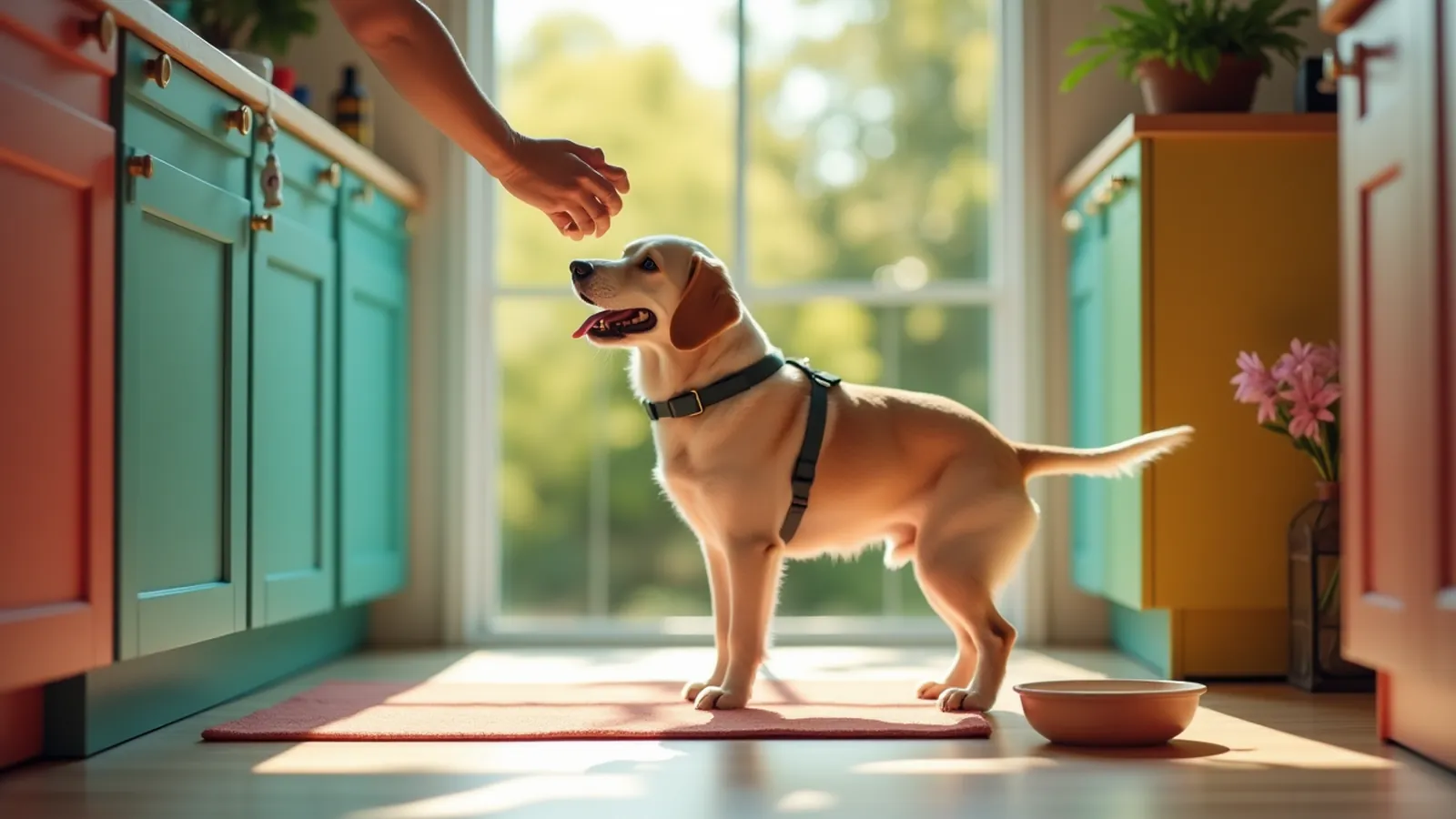
Two dogs, one kitchen
A puppy and a rescue at different stages make mealtimes the likeliest flashpoint in the house. Separate rooms, separate bowls, same time, every day. Never feed them from one bowl and never let one finish the other's leftovers: the diets usually differ, and bowl-sharing is how guarding starts.
If the puppy finishes first and starts scratching at the door, that is a puppy problem, not a rescue problem. Settle him somewhere he cannot practice bothering the older dog; the puppy training plan covers the settle-on-a-mat piece that makes this easier.
Keep the rescue's meal the quietest part of his day. When you take him out afterward, use the harness and lead he already knows: a week when he is off his food is not the week to teach new gear. The steps in dog harness training suit a settled week instead.
If he only eats when you are in the room
Some dogs eat only with company and stop the moment the door clicks shut. Often that fades as the routine settles. Sometimes it is part of a wider pattern of not coping with being alone, which is common: one review cites estimates that between about 22% and 55% of the general dog population show separation-related signs, and that these cases make up 14% to 40% of behavior referral cases.
The same review notes that the signs can come from very different emotions, including fear, frustration and panic at being separated from an attachment figure, and that no diagnostic test settles which one you are looking at. So watch what he does rather than reaching for a label. If he eats with the door open and you in the next room, build the distance slowly. If he paces, drools, howls or attacks the door the moment you leave, that needs its own plan: see dog separation anxiety training.
Troubleshooting the first weeks
- If he takes one mouthful and walks away
- Leave the bowl and leave the room. Do not follow him with it. Note the time and try the next change on the list at the next meal.
- If he will only eat from your hand
- Stay on the hand-feeding ladder and move one rung at a time, only when he is calm at the rung you are on.
- If he eats only at night
- Keep offering both meals at the same times, keep the station quiet in the evening, and log it. Mention it at your next vet visit.
- If he freezes, growls or snaps when you come near the bowl
- Stop approaching while he eats, feed behind a closed door, and get help. Never punish the growl: it is information, and removing it removes your warning system.
- If the puppy keeps trying to share
- Gate the puppy in another room for both meals, every day, until the routine is boring to everyone.
- If he eats well for a week and then stops
- Vet first, then look at what changed: a vaccination, visitors, a new food, more training treats than usual.
Settling in has its own order, mealtimes included, and the 3-3-3 rule for rescue dogs sets out what the first weeks usually look like.
When to get professional help
Stop and call for help if
- He refuses food and seems unwell in any way. VCA Animal Hospitals says a pet with a decreased appetite or who refuses to eat should be promptly evaluated by a veterinarian.
- He is vomiting, has diarrhea, is drooling, seems sore, or is quiet and withdrawn.
- A dog who ate well last week has suddenly stopped.
- He growls, snaps or bites when you come near his bowl or his food.
- He is losing weight, or a puppy is not eating and not gaining.
- He panics when left alone: drooling, howling, or damaging doors and floors.
Who to call. Start with your veterinarian: pain, illness and medication side effects can all show up as behavior changes. For behavior problems, look for a board-certified veterinary behaviorist (ACVB directory), a certified applied animal behaviorist, or a certified behavior consultant, for example through the IAABC or the CCPDT directories. Ask any trainer which methods they use; reward-based is what the American Veterinary Society of Animal Behavior recommends.
AVSAB's position statement on humane dog training recommends reward-based methods and warns that aversive methods can increase fear and avoidance. That matters here: a frightened dog who is shouted at or dragged away from his bowl learns that the bowl is a dangerous place, and the not-eating can get worse.
This page is general guidance, not veterinary or behavior advice for your dog. Appetite is a health signal as much as a training one, and only your vet can examine him. How we write explains the sources behind pages like this one, and about Good Dog Basics says plainly who we are and are not.
Frequently asked questions
Why is my dog not eating?
Start with the ordinary causes: a new home, being watched while he eats, a bowl in a busy spot, another dog nearby, a bowl that slides or rattles, too many treats between meals, or a stressful week. Change one thing at a time and log what he eats. If he also seems unwell, that is a vet call, not a training problem.
Is it normal for a rescue dog not to eat food in the first few days?
It is common enough to plan for rather than panic over. A newly adopted dog is adjusting to a whole new environment, and behavior in newly adopted dogs keeps changing over the first months. Common is not the same as ignore, though: keep the log, and treat any refusal that comes with other symptoms as a vet question right away.
Should I leave food down all day for a rescue dog?
Usually not, unless your vet says otherwise. An all-day bowl hides how much he is actually eating and removes the rhythm that makes meals predictable. Short timed meals give you real information, which is exactly what you need in the first weeks. Puppies, elderly dogs and dogs with health conditions are the exceptions, and their schedule should come from your vet.
My dog is not eating but drinking. Should I worry?
Drinking does not cancel out not eating. Note when he last ate properly and whether anything else looks off, such as drooling, vomiting, loose stool, hiding or low energy, and tell your vet all of it. Several meals in a row with nothing eaten is reason enough to call the same day rather than wait a few more days.
Sources
- Shelter dog behavior after adoption: Using the C-BARQ to track dog behavior changes through the first six months after adoption, National Library of Medicine (PMC) (accessed October 29, 2026).
- Issues With Separation Related Problems in Dogs, National Library of Medicine (PMC) (accessed October 29, 2026).
- Urgent Care for Loss of Appetite, VCA Animal Hospitals (accessed October 29, 2026).
- Position Statement on Humane Dog Training, American Veterinary Society of Animal Behavior, 2021 (accessed October 29, 2026).
Settling in takes an order, not a scramble
The first days, house training, alone time and building trust, in the sequence that matters for an adopted dog.